*** PLEASE VISIT OUR NEW AND IMPROVED NEWS WEBSITE. CLICK HERE
Showing posts with label air travel. Show all posts

Thursday, November 17, 2011

Airline Passengers Told to Pay Extra for Fuel

Hundreds of passengers on a Comtel flight from India to Britain were stranded for six hours in Vienna when they were told they had to pay extra to buy more fuel. 
 
The charter service asked them to kick in more than 20,000 pounds ($31,000) to fund the rest of the flight to Birmingham, England. In the video below a Comtel cabin crew member tells passengers, "We need some money to pay the fuel, to pay the airport, to pay everything we need. If you want to go to Birmingham, you have to pay."

Some passengers said they were sent off the plane to go to cash machines to get the money.

Video:

Wednesday, November 16, 2011

Air Passengers Start Wearing Their Luggage

Scottevest SeV Chloe Hoodie
MSNBC: In an effort to avoid checked baggage fees, many passengers now try to pack everything they’ll need for a trip into carry-on bags that can fit into an airplane's overhead bins.

For now, most domestic airlines don’t charge for carry-on bags or for coats, purses and other small personal items. But few travelers would be surprised if more airlines began following the lead of Spirit, Ryanair and some other budget airlines, which do charge fees for carry-ons.

It may already be — unofficially — happening. In what George Hobica, founder of travel website Airfarewatchdog.com, terms a “relatively new trend,” some airlines are getting aggressive about weighing carry-on bags.

“Hawaiian has a 25-pound weight limit and actually weighs bags at the gate, snatching away bags that weigh more and charging a checked bag fee,” said Hobica. “EVA Airways has a 15-pound limit, and several other airlines have limits as well. It's touted as a safety precaution, of course, but it's also a sneaky way of extracting fees for carry-ons.”

For passengers not willing to take a chance at getting dinged with a last-minute charge, there’s another option: wearing your luggage.

At the San Francisco-based chain of Edwards Luggage stores, co-owner Randy MacKenzie said the line of iPad-compatible vests, hoodies, jackets and trench coats from SCOTTEVEST, each with between 20 and 30 built-in pockets and compartments, is a big hit in the “luggage you can wear” category.

"We started selling the SCOTTEVEST two years ago and we've sold hundreds. The product continues to resonate with travelers as it becomes more and more challenging to get through airport security and important to utilize valuable packing space."

For parents trying to carry both a baby and a bulging diaper bag, the convertible Go-Go Babyz “Sidekick” is a diaper bag that doubles as a wearable baby carrier.

And then there’s the Jaktogo, a carry-on bag that can be worn as a coat. (Other versions include the Dresstogo and the Ponchotogo.)

Invented by John Power, an Irish-born engineer who was determined to find a way around carry-on limits imposed by the budget carriers he frequents in Europe, the Jaktogo has 14 various-sized pockets designed to hold more than 30 pounds of clothing, gadgets and gear.

“It’s certainly not a fashionable item you’d wear around town,” said Power. “And we won’t be showing it off in Paris or Milan. It’s ‘boarding-gate’ clothing that’s all about practicality and thriftiness.”

Sunday, October 30, 2011

JetBlue Passengers Stranded for 7 Hours


NBC Connecticut: For seven hours, the passengers on JetBlue flight 504 have been grounded at Bradley Airport, with no bathrooms and no water, according to passengers on the plane who are Tweeting and others who contacted NBC Connecticut.

The passengers left Ft. Lauderdale, Florida just after 10 a.m., heading for Newark, but the flight was diverted to Bradley, where it had been since 1:30 p.m.

"At the three-hour mark they told us by law they had to let us off the plane. They were waiting for a tug to take us to a gate. We heard that same message at the four-hour mark, and continuing until state troopers boarded the plane for a medical emergency," said Robert, a passenger who did not want to give his last name.

A paraplegic on the flight had a medical issue, and about seven hours after the plane landed. It was at that point that police and firefighters came onboard to render medical assistance.

“Still on the plane. We haven't moved. Now EWR closed. Getting ugly in here. People yelling wanting to get off,” Andrew Carter said via Twitter just before 6 p.m.

JetBlue Flight 1013 from Boston to New York has also been grounded for hours and they ran out of water, @HedgeyeENERGY tweets. A vehicle will be towing them to one of the gates.

The airline released a statement Saturday night.

"JetBlue is doing everything possible to ensure our customers affected by today's unusual combination of weather and infrastructure issues are being well cared for," said Victoria Lucia, JetBlue spokesperson. "We apologize for the experience."

The JetBlue flights were two of 23 airplanes diverted to Bradley Airport Saturday, according to Gov. Dannel Malloy. The state was trying to move 1,000 cots to the airport late Saturday to help make stranded passengers comfortable, Malloy said.

Even after being let off their planes, frustration levels continued to be high for passengers who were stuck at the airport.

"I'll never fly JetBlue again, and I'll never fly through Connecticut again," Robert said.

Video:

View more videos at: http://nbcconnecticut.com.

Wednesday, October 26, 2011

First 787 Commercial Flight Lands in Hong Kong

The Boeing Company’s Dreamliner, the world's first carbon-composite airliner, flew from Tokyo to Hong Kong today carrying its first paying passengers.

The plane's takeoff into clear blue skies after a salute and shower by an airport fire truck marked what its maker hopes will set a new benchmark in air travel. The Dreamliner won't fly any faster than the first 707 jetliner the U.S. company built a half century ago, but it's designed to make the hours aloft more pleasant for passengers and cheaper to fly for its owners.

The Dreamliner that flew today is owned by All Nippon Airways Co. A jubilant Shinichiro Ito, the airline's president and CEO, described his brand new plane as a "game changer." He acknowledged, however, that production hiccups that delayed delivery for three years had put his carrier "through hard times."

Passengers on the flight were treated to shifting hues of color, including a rainbow display as the aircraft lifted off from the tarmac in Tokyo, its engines a gentle whistle. Other amenities include windows that are 30 percent bigger and which can be dimmed electronically, seat-to-seat e-mail, bidet-equipped lavatories with their own windows, and bigger touch screen entertainment panels.

Video:

Tuesday, October 25, 2011

Aero 2075: Flying Into a Bright Future?

Lockheed Martin's Futuristic 'Green Machine'
Terminal U: The UK could play a leading role in developing new technologies such as passenger planes that can fly themselves and hypersonic travel by 2075, according to a report by the Institution of Mechanical Engineers (IMechE).  But they warn that the UK could lose its position as the world’s second biggest aerospace manufacturer if the coalition government does not set out a clear vision for investing in new research projects.

The report – “Aero 2075: Flying into a bright future?” – said that even in the next 20 years, the UK could tap into potential sales of 25,000 new aircraft, set to be worth more than £2 trillion ($3 trillion). But UK R&D funding in the aerospace sector is at a “historic low,” the report added.

Philippa Oldham, Institution of Mechanical Engineers’ head of transport told TERMINAL U: “Aerospace manufacturers have suffered in the current [economic] climate due to budget cuts. But the UK needs to remain competitive, particularly as the BRIC countries, such as China, India and Russia have big [aerospace] development programmes.

“The UK has expertise in manufacturing aircraft engines, wings and landing gears, for example and we need to keep reinvesting to stay competitive.”

The IMechE is calling for a new dedicated research body and a vision for UK aerospace.

The future of flying – by 2075
The IMechE said the UK has expertise that could pave the way to planes flying in a V-formation in future, which it added could cut an airline’s fuel bill by up to 12 percent. In theory, formation flying is more efficient, by taking advantage of the airflow generated by the plane in front.

Planes would be equipped with remote sensing equipment to control the distance between them. The technology assumes that planes will be flying without a human pilot in the cockpit. Advances in automation technology has led to discussion on whether passenger jets in future could fly without pilots.

While the technology is already proven in the military market through the use of unmanned aerial vehicles (drones), the aerospace industry is aware that the issues around using an unmanned military plane with information gathering equipment are different from flying an unpiloted aircraft full of passengers.

“The UK is undertaking a lot of research programmes and trials in how this automation works and to make the software as safe for commercial air travel as possible,” Oldham said. “The main issue is people’s confidence if they knew they didn’t have a pilot on board.”

Hypersonic technologies that could enable passengers to travel at more than five times the speed of sound are also in development and require huge funding to move the concepts off the drawing board. The IMechE believes that further advances in space technology could form the basis for hypersonic commercial passenger travel.

The scramjet-powered space plane has moved to testing stage and could in future launch passengers straight from the ground into space – so-called, single stage to orbit, the IMechE report said. If you can’t wait that long, there’s always the option of a seat on Virgin Galactic’s edge-of-space flights, if you can stump up US$200,000 (£125,500) for the trip.

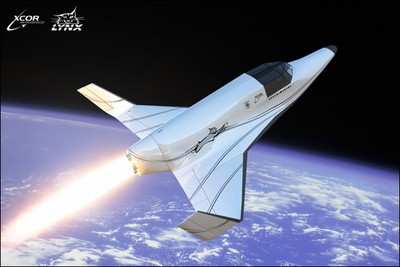
And while the dream of next-generation supersonic travel is still alive and well, a major challenge to developing a modern day version of Concorde lies in achieving low levels of supersonic boom overland. Defence firm, Lockheed Martin’s concept, Green Machine is designed to reduce the effects of sonic boom, with an inverted-V engine.

Designing passenger jets of the future that are more efficient and produce less noise remain key goals for the industry. Planes with a blended wing design – where its fuselage, wings and engine are blended together – has been a discussion point for many years.

The IMechE’s Oldham said: “The question is: how do you change the aircraft? It’s a risk for aircraft manufacturers to take, as this concept is so far removed from the standard ‘cigar tube and wing design’.”

The Dreamliner – which is made mostly of composites to make it more efficient and lightweight – “is all progress towards improving the airframe itself,” she added.

Airplane manu­facturers are taking steps to develop greener aircraft, and solar-powered technology is being explored to power commercial flights. While it is very unlikely that solar or hydrogen fuel cells alone will provide enough energy to fuel a passenger plane, researchers are exploring the opportunities for on-board electrical generation from renewable sources.

Where do we go from here?
Before we all get excited (or nervous) at the prospect of hypersonic travel and pilotless planes, there are still many boundaries to overcome - and funding for R&D is not the only major issue. The switch to more radical plane designs will only occur when the airline industry can see the risk reduced in taking such a step change, the IMechE said in its report.

There are also long production cycles for new aircraft. The first passenger carbon-composite jet – the Dreamliner – will enter passenger service for the first time on Wednesday, but much has been made of its production delays, trailing back more than three and a half years.

To turn research into reality, there needs to be a clear vision, supported by the government, the IMechE’s Philippa Oldham said: “We [the UK] don’t have a clear vision of where we want our aerospace sector to go. What do we want? Speed to travel? To travel more into space? To just transport more people? Or focus on more [aircraft] noise reductions and fuel savings?"

“There are so many unanswered questions and so many opportunities to look into this but we need the strategic vision to do that. Aircraft engines are always improving, noise reduction is happening; it’s what that next step is.”

Sunday, October 23, 2011

Revolutionary Dreamliner to Begin Service Wednesday


USA Today: The Dreamliner, Boeing's 787 jet that's touted as a revolutionary change in how passenger planes are made, is taking to the skies — at last.

On Wednesday, the world's first jet to be made mostly of carbon fiber, instead of traditional aluminum and steel, will carry passengers for the first time when Japanese carrier All Nippon Airways (ANA) flies from Tokyo to Hong Kong with 264 travelers on board.

The flight is a coming-out party for a jet that reflects the biggest change in aircraft construction since metal replaced wooden biplanes. The Dreamliner's relatively light weight and aerodynamic features promise to cut fuel costs up to 20% and enable airlines to reap profits from new non-stop routes. The jet also aims to attract passengers with cabin comforts that include overhead bins and windows larger than those on current passenger jets.

Excitement about the Dreamliner has been so great that it's become the fastest selling twin-aisle commercial jet in Boeing's history — before a single one rolled off the assembly line.

"This is a huge leap," says Jon Ostrower, editor of Flightblogger.com, who has chronicled the Dreamliner program. "If it's not a revolution, it's a very significant evolution of the way we're used to flying and the way we're used to seeing airplanes put together."

But the Dreamliner is also a source of pressure for Boeing, which delivered the first one three years later than planned. While the Dreamliner's debut was being delayed by parts shortages, work stoppages and other problems, Boeing's chief rival, European aircraft-maker Airbus, was working on a mostly carbon fiber jet of its own that is set to begin test flights next year. There also are questions about how long it will take for the new jet to turn a profit for Chicago-based Boeing. While Boeing will not say how much it spent creating the jet, its price ranges from $193.5 million to $227.8 million.

Boeing, which has sold 821 Dreamliners, brushes off concerns that the delays in getting the jet in the sky are causing financial or production headaches to meet aggressive delivery schedules. Instead, Boeing says, the nation's biggest manufacturing exporter has made a wise investment in a jet that will pay dividends for years to come.

"We really have delivered a game-changer to the marketplace," says Scott Fancher, Boeing vice president and general manager of the 787 program. "We've made an investment in a set of technology that will be with us for 20 to 30 years and serve as a basis for the development of our new airplanes as we go forward."

Impressive innovations
There's no doubt the Dreamliner represents a big change in the way planes are made. Its body is 50% composites by weight, a material that makes the midsize, twin-aisle Dreamliner light and strong. Other jets have incorporated composites, but not to the extent Boeing has put them into the 787.

The payoff for airlines is the ability to fly long-distance trips without burning as much increasingly costly jet fuel as other similar-size planes. The Dreamliner's unique makeup also won't corrode as easily as other jets, making it 30% less costly to maintain, Boeing says.

"This is the first major change in overall fuselage structure since going from wooden to metal airplanes," says industry consultant George Hamlin of Hamlin Transportation Consulting in Fairfax, Va.

The Dreamliner can carry 210 to 290 passengers. It could pave the way for airlines to have new, direct flights between far-away cities on routes that otherwise wouldn't have profitably supported non-stop trips on a bigger jet burning more fuel with so few passengers.

"If the airplane performs as advertised, we will see smaller cities getting more international service — the Bostons and Portlands and Clevelands of the world," Ostrower says.

Passengers wanting to fly overseas from those cities now, he says, often "have to fly to a Chicago or (Washington) D.C. to pick up a direct flight on a much larger airplane."

ANA is the first airline to get the Dreamliner, but United Continental won't be far behind. United, which is merging with Continental to become the world's biggest airline, will be the first U.S. carrier to get the 787. It plans to fly it between Houston and Auckland, New Zealand, by the latter half of next year.

That Houston-to-Auckland route is a prime example of how the Dreamliner opens up "new markets that might have been a little bit thinner on the demand side," says Jim Compton, United Continental's executive vice president and chief revenue officer.

If the 787 is making the trip, airlines also could make more money on routes they're already flying, Compton says.

"Fuel is the biggest cost item we have today, so to get 20% savings on that just improves the profitability," he says. "And obviously it's going to draw customers."

Making flying more comfy
At a time many travelers see flying as an ordeal to endure, Boeing says the Dreamliner was designed to make air travel more pleasant from the moment passengers step aboard.

Instead of a narrow portal, fliers will step through a tall, open archway to enter the cabin. When they want to doze or watch a movie, they can push a button to dim their window rather than tug on a shade. The cabin ceiling has lighting that simulates the sky, going from daylight to dusk.

Fliers should feel less knocked around thanks to sensors that help ease turbulence, Boeing says. The engines are designed to be less noisy than those on conventional passenger jets. The Dreamliner's carbon composition allows for higher humidity inside the cabin. That means passengers should be less prone to dry throats and noses or feeling exhausted once they land.

"It really has an effect on how a person feels after a 10- or 12-hour flight," Boeing's Fancher says.

The jet's passenger features have caught the attention of some frequent fliers who are eager for an opportunity to climb aboard a jet that Boeing says will make their hours in the air less arduous.

Clarissa Cervantes, a research associate in Beverly Hills, says she can hardly wait. "I believe this is the future for travel," she says.

Matt Daimler, founder of SeatGuru.com, a website that informs travelers about airline cabin features, says the Dreamliner's 19-inch-tall windows — compared with the 11- to 13-inch windows found on most passenger jets — are a particular treat.

"Being able to see more, and having less of a feeling of claustrophobia in that aluminum tube, is a bonus right off the top," he says.

But some of the Dreamliner's other perks, such as the cabin lighting system, are no longer unique, Daimler says. Competitors such as Airbus have caught up to Boeing while it struggled to get the Dreamliner in the air.

"The challenge with some of the other little things they've talked about is they've found their way to other planes," he says. "So is it as exciting as when they announced it three or four years ago? Maybe not so much anymore."

Unprecedented delays
The Dreamliner was dogged by delays after it went into production in May 2007. Deadlines were pushed back for reasons ranging from a machinists strike in late 2008, to the discovery of a structural flaw in the jetliner in June 2009, to an onboard electrical fire that temporarily grounded all test flights in November 2010.

"I don't recall a three-year delay in a commercial program of any significant size," says industry consultant Hamlin. "Unprecedented probably applies here."

Meanwhile, Airbus was catching up. Its A350 will be made of slightly more carbon fiber — 53% by weight — than the Dreamliner, and the first one is scheduled to be delivered at the end of 2013, says Chris Jones, vice president of sales for Airbus Americas.

Despite its problems, the 787 remains in high demand. Along with ANA and United Continental, Delta, Virgin Atlantic and Vietnam Airlines are among the 56 customers that have ordered a record-breaking 821 Dreamliners, worth roughly $145 billion.

Boeing's next challenge is to fill those orders. To do it, the company plans to go from its current rate of producing two Dreamliners a month to 10 a month by the end of 2013.

That's an unprecedented production pace for a twin-aisle jet, some analysts say, and they question whether it can be achieved, particularly given the plane's history of problems.

"You're doing a whole bunch of things that are impossibly new," says Richard Aboulafia, an airline analyst for the Teal Group, noting Boeing's dependence on various suppliers as it works with the new 787 technology.

And, Aboulafia says, Boeing will have to churn out Dreamliners to start seeing a profit. It could be at least a decade before the company makes back the money it spent developing the groundbreaking jet.

"They should focus on making money on each one they build first," he says, "and that's going to take a few years at least."

Boeing says that it's prepared to meet the production schedule and expects the Dreamliner's "profitability to improve over time, in the same manner as our other commercial production programs," Boeing spokesman Scott Lefeber says.

On Thursday, the U.S. Government Accountability Office raised questions about the maintenance and repair of composites in commercial jets such as the Dreamliner.

The GAO said the FAA and Boeing are dealing with any concerns. But Gerald Dillingham, director of civil aviation issues for the watchdog office, said, "It will take some time to acquire the record" of how composites behave when they are used in such quantity.

"I don't think passengers should be any more concerned than they would ordinarily be in taking a flight," Dillingham said. "The aircraft has been thoroughly tested at every stage of development and has passed both U.S. and European airworthiness standards."

Keeping the buzz going
As the flying public gets its first chance to experience the Dreamliner in coming months, it will become clearer whether the initial buzz around the aircraft will last.

There's no guarantee, for instance, that the fuel savings that airlines will accrue by adding Dreamliners to their fleets will be passed on to passengers in lower fares. However, the savings may slow ticket price increases.

And there's no certainty that the advantages to passengers that Boeing touts won't be diluted by the airlines as they put the planes in service. Although bins and windows will remain large, for instance, it's the airlines that choose what seats — and how many — are put in each plane. More passengers carrying on more baggage can reduce a feeling of spaciousness and fill even larger bins quickly.

Whether the buzz will last, Ostrower of Fightblogger.com. says, will largely "depend on how these planes are received, how they're marketed by airlines and how they're customized."

But in the meantime, he says, "There's a heck of a lot of excitement about this airplane."

Friday, October 21, 2011

Help For Travelers With Flying Phobias

The Daily Mail: My name is Jenny Coad and I am afraid of flying.

And I am not alone. There are more than 12 million of us sufferers in the UK, all of whom are terrified at the idea of being 35,000ft up in the air in a vast metal bird.

This is what brings me to a bland, windowless conference room at Heathrow Airport with 250 anxious people split into groups of ten. We are all, to various degrees, affected by The Fear. Some will fly, but only in a state of sweaty paralysis. Others cannot even contemplate boarding a plane, not even to visit loved ones.

We all need help - and have signed up to Virgin Atlantic’s 'Fear Of Flying' course - a programme that is designed to unmask fear, teach us how to conquer it and become content (or at least calm) flyers. The answer isn’t a stiff gin – though I usually find that wonderfully soothing. Too much of the dulling drink and you could end up caught short in a Gerard Depardieu-style pickle.

Our instructors believe that knowledge is power. Their aim is to explain everything about the physics of flying, from how a plane takes off to why it doesn’t matter if lightning strikes (the fuselage, we are told, acts as a 'Faraday’s Cage', spreading the electrical charge over the plane’s surface and protecting the interior).

Even better is the news that turbulence is safe, only uncomfortable, and all those alarming bumps are only inch drops in terms of altitude. These are caused by slight changes in temperature and unstable air. I will try to remember this next time I’m on a wobbly flight. It might just stop me from grabbing the leg of the person sitting next to me – particularly embarrassing when it's snuggly newly-weds.

It is reassuring too, to hear that the wings are virtually indestructible. They won’t simply fall off mid-flight – so there is no need to watch them intently, waiting for signs of impending disaster. To me, this all sounds hugely reassuring. But some people in the room haven’t flown for years - one of them because of a ‘mid-air incident’ that he refers to in sinister tones.
Others fear they may pass out, panic, lose control. But we’re all in this together - and concerns, ranging from worries for the health of the pilot to whether the aviation industry is conspiring to withhold the true risks associated with flying - flood the room.

When people ask, ‘how does the pilot know if the wheels have gone down, what if he forgets to shut the doors, what if he’s hung over?’, I wonder how Captain Dave Mabbett - who has flown over 40,000 engine hours and presumably knows a thing or two about aviation - manages to keep his cool.

He does, admirably, and answers everything – and if he can’t, he promises to find out. He explains the complete importance of safety within the airline industry. Air travel, as well as being the safest mode of transport, is constantly improving, he says. There are accidents, but all of them are investigated and lessons quickly learned.

Captain Dave doesn't avoid talking about past crashes. These serve, for many, as examples of why you would be mad to fly. Take the horror of Air France flight 447, which plunged into the Atlantic in 2009, resulting in the deaths of all 228 passengers.

The speed measuring device, which iced up on that particular model of the Airbus 330, was immediately modified on all aircraft. Pilots now attend a training programme outlining exactly what to do when faced with that situation. They are taught to prepare the plane as if for a normal landing by lowering the nose towards the horizon. The aircraft will act like a glider, reach what’s called a ‘known speed’ of roughly 280 miles per hour, and come down at approximately 1000 feet per minute.

David Nott, a 'Cabin Safety and Security Training Instructor', is also on hand too to dispel a few myths about the role of crew on board. They are not just there to sell cigarettes and alcohol. Did you know that all cabin crew members are medically trained? That they can assist with on-board births (one baby girl born on a Virgin flight was named Virginia – poor thing)? That they know exactly how to treat panic attacks and are able to administer life-saving first aid? Training is rigorous and they are re-tested constantly.

Facts, though, aren’t always enough. This is where Geoff Rolls, assistant to Paul McKenna and our hypnotist (I’m not kidding) for the day - comes in. He is here to trick us into flying with confidence – and even enjoying it - again. And not with gin.

Rolls has us tapping our foreheads, pinging elastic bands on our wrists and even holding our tongues. It might sound silly, but this is designed to be a distraction. Holding my tongue and trying not to giggle is certainly diverting. But the technique worked for the aviation-phobic Whoopi Goldberg. The Fear Of Flying team flew to the US to give her one-on-one tuition in 2009. She crossed the Atlantic on her own, quite happily, soon after.

So we take to the air. Up, up and away. Flying with a plane load of petrified passengers is not fun. But the flight is part of the cure. While in the air, the pilot explains exactly what is happening when the plane banks, the engines growl or discomforting mechanical noises sound. I am sitting next to a pale-looking father who hopes to iron out his, and his daughter’s, fears. She’s here too, and so is his wife. He tells me, ‘I usually throw up on flights, so I’m hoping that today will help me with that.’ Me too.

It’s a great relief, for everyone, to land on firm ground. Certificates are handed round, tears wiped away and elastic bands pinged for the last time. I have flown since and, despite it being with Ryanair, found the experience a relaxed one.

The Fear Of Flying course is not a jolly day out. But when you’ve recovered from the experience, you might find that your fear of flying has gone. Otherwise, I’d recommend sticking to the gin and tonic.

Wednesday, October 19, 2011

Orbitz Fined $60,000 for Deceptive Advertising

Fox News: The federal government has fined travel booking site Orbitz $60,000 for allegedly obscuring information on its website about the extra taxes and fees on airline tickets.

Ticket companies are supposed to include the full price of airfare, including taxes and fees, in any advertisement. According to the Department of Transportation, Orbitz displayed homepage ads in early 2011 that did not have that information. Instead, the taxes and fees were disclosed at the bottom of another page in fine print.

"Consumers have a right to know the full price they will be paying for air fares," Transportation Secretary Ray LaHood said in a written statement. "We established airline price advertising rules to protect the consumer and will take enforcement action when these rules are violated."

But Orbitz described the apparent violation as a "glitch," claiming the issue has been resolved.

"Orbitz is in compliance with DOT advertising requirements and the glitch that resulted in how fares were displayed for a short period of time earlier this year has been addressed," Orbitz said in a statement.

There is one exception to the taxes-and-fees disclosure rule when it comes to taxes imposed on a "per-passenger basis," but starting next year ticket agents will have to include all taxes and fees in ads.

Tuesday, October 18, 2011

Finnair Flight Attendants Flashdance

Jaunted: The world loves to watch flight attendants dance. This we discovered when that Cebu Pacific video of FAs doing the safety demo to the tune of Lady Gaga and Katy Perry went viral. Who are we kidding? The world loves to watch flight attendants do anything other than typical flight attendant stuff, so when Finnair's girls got together to dance for their fellow crew at base, it would of course leak online.

The song: "September" by Earth, Wind and Fire.

The place: the Finnair Crew Lounge at what we're assuming is Helsinki Airport

Finnair has already posted it on their own YouTube, so this could be a publicity stunt, but the fact they didn't involve any passengers (or public) leads us to believe this is just what it seems; a few flight attendants got an idea, got their friends to play along and then alerted the airline to the fun, who were game to support it.

Cute! Keeping their black leather gloves on was a nice touch.

Click here to read how the Flashdance was organized.

Video:

Monday, October 17, 2011

Passengers Stranded on Tarmac for 8 Hours

The Telegraph: Almost 200 passengers on board an Air India flight were stranded on the tarmac at Gatwick Airport for more than eight hours, after fog prevented the plane from touching down at London’s Heathrow.

Despite the airports being just 44 miles apart, passengers on the flight from Ahmedabad via Mumbai to Heathrow were kept on board the aircraft and complained they received no food, refreshments or information from the crew.

The flight had been due to land at Heathrow at 7.30am, but was diverted to Gatwick in Sussex because of heavy morning fog.

It is believed the crew then departed the flight and the aircraft was unable to take off again until a new team had been sent from Heathrow.

Rahul Joglekar, a BBC producer, who was on the flight used Twitter to communicate the mounting frustration on board.

He wrote: “Too much fog at Heathrow … why not let us deplane at Gatwick?”

At one point officers from Sussex Constabulary attended the scene to calm rising tension amongst those passengers who were angry at the lack of information.

Some of those on board are understood to have offered to leave the flight at Gatwick and make their own way to their final destination, but were refused permission to disembark by the airline.

Eventually after eight and a half hours on the tarmac, the new crew arrived and the flight was able to take off and make the short journey across London to Heathrow where it landed shortly before 5.20pm.

A spokesman for Gatwick Airport said: “A plane was diverted from Heathrow due to fog and landed around 8am. There was some issue with bringing a crew from Heathrow. During this time we provided every support requested of us, but all matters related to the passengers remains the responsibility of the airline.”

The spokesman said Gatwick Airport would have been happy to facilitate the disembarkation of the passengers, but the ultimate decision lay with Air India.

After finally arriving at Heathrow ten hours late, Mr Joglekar expressed his relief when he wrote: “Just landed at Heathrow. There is a God.”

No-one at Air India was available for comment.

Thursday, October 6, 2011

FAA's New Air Traffic Control System Hits Turbulence

Information Week: The Federal Aviation Administration continues to struggle with budgets, deadlines, and management of its multi-billion dollar upgrades to the nation's air traffic control systems, government officials and industry executives told Congress on Wednesday.

The long-term, multi-stage NextGen effort, which has been underway for several years and isn't slated to be complete until approximately 2025, aims to improve American aviation by upgrading numerous Cold War-era flight systems. But the effort has long suffered problems.

Within the last couple of years, the FAA has instituted a number of changes to improve NextGen's management, including working closely with an advisory group made up of users and other constituents, changing the NextGen program so that it directly reports to the FAA's deputy administrator, and centralized program management for the effort.

However, ongoing problems continue to threaten the program's costs and timeline and have kept private industry in the dark about the program's benefits and schedule, the officials and executives told the House Transportation and Infrastructure Committee.

As a result, according to Lee Moak, president of the Air Line Pilots Association, a group that represents the interests of 53,000 pilots, and Ed Bolen, president and CEO of the National Business Aviation Association, manufacturers are building and delivering future-proofed planes and carriers are putting new processes in place but can't take advantage of all their capabilities because of delays in or improper management of NextGen.

For example, numerous carriers are ready to adopt procedures that they co-developed with the FAA to provide "smooth, fuel efficient, low emission descents that reduce [the need for] communications and enhance safety during good weather conditions" and others that help out in poor weather conditions, Bolen said. But the FAA doesn't even have plans or approval processes to permit planes to follow these procedures even as jet fuel costs continue to rise.

In another case, the En Route Automatic Modernization (ERAM) system, a computer system to provide communications and generate display data for air traffic controllers, is about 5 years behind schedule and as much as $500 million over budget, according to a study by Mitre Corp.

According to FAA Inspector General Calvin Scovel, early testing of ERAM revealed problems with safety management, and controllers had to rely on cumbersome workarounds to overcome those issues. That problem snowballed. "ERAM's problems are the direct result of poor program management," Scovel said. "There was over-optimism that ERAM could be deployed in a year, and FAA didn't begin to mitigate some risks until three years after problems began surfacing. This was a program that was hobbled out of the gate." Even with all those problems, and despite the significant program risks, the FAA still hasn't conducted an assessment of ERAM's dependencies or impacts on other program costs.

At a higher level, Scovel noted, the FAA has yet to develop an integrated master schedule to help manage NextGen, meaning that "programs are left with no clear end state."

The officials and executives pointed to a number of causes for the delays and cost overruns, including unstable requirements, poor program and contract management, the inability of the FAA to bring all constituents into the decision-making process, training, and a lack of communication.

Now, added to that list might be the fiscal environment. Amidst all the turbulence, Congress is considering slashing spending at the Federal Aviation Administration between 5% and 10%, which could further delay implementation of some pieces of NextGen.

"There's no question that reduced funding will cause delays, and that the delays will cost us more in the end in terms of lost benefits as well as increased costs of deployment," FAA deputy administrator Michael Huerta told legislators, adding that Congress should fund the FAA to the levels suggested by President Obama. "In the end, to be able to meet the timeline set out, the President's funding level is really what we need to get us there."

The government has already spent nearly $3 billion on NextGen, and the effort will likely cost into the tens of billions of dollars. By 2018, the FAA estimates that, thanks to NextGen, airlines will see a 35% improvement in delays and save more than a billion gallons of fuel. However, with continued problems and looming budget cuts, those numbers may be hard to reach.

Pre-screened Flyers to Move in the Fast Lane

Miami Herald: Flying within the United States just became slightly easier for select American and Delta fliers at four airports, including Miami, who can now skip through security without — gasp — taking off their shoes or belt or removing their laptop from its carrier.

These privileged few even get their very own fast lane. But, don’t bother trying to sign-up: those who are eligible will be notified.

The pilot program, which kicked off Tuesday, is part of a Transportation Security Administration (TSA) effort to focus more specifically on fliers who may pose a danger, while scaling down security measures for a small pool of pre-approved passengers.

More than 500 million travelers fly domestically each year, officials said, noting the “vast majority” aren’t a security risk. Now, under TSA’s PreCheck, an estimated 70,000 travelers have signed up to skip some of the flying annoyances in Miami, Dallas/Fort Worth, Atlanta, and Detroit — the largest hubs for American and Delta, respectively. Hundreds of thousands more fliers are eligible, officials said.

“This will strengthen our security while significantly enhancing the travel experience,” said Robin Kane, TSA’s assistant administrator. The agency, the largest federal startup since World War II, was created after 9/11. Often, it has found itself bashed by angry travelers who feel officials go too far, invading their privacy. How to balance security interests while reducing the hassle for risk-free fliers is an ongoing debate.

TSA’s latest effort is a sort of compromise, and if successful, officials say they hope to expand the program across the country and to other airlines. The fliers — mostly business travelers — who are eligible for this program will pass through security about twice as fast as regular passengers. Shoes and laptops stay put, and travelers can keep on a light jacket. Liquids remain restricted to no more than 3.4 ounces for carry-on luggage. And participants will still be subject to random security checks.

Beyond the limited American and Delta frequent fliers invited to join, U.S. citizens who are members of the Customs and Border Protection’s Trusted Traveler programs are also eligible. Those passengers already pass more quickly through U.S. immigration after paying a $100 fee and going through the agency’s extensive background check.

Government officials already pre-screen each U.S. passenger, checking their names and birth dates against a terrorist watch list. But frequent flier and expedited immigration programs collect more detailed personal data on its members.

“It doesn’t mean the other people are a bigger threat,” said Mark Hatfield, TSA’s federal security director. “We just have more information on them. The more people we move from the ‘unknown’ category to the ‘known’ category, the better.”

Sari Koshetz, a spokeswoman for TSA in Miami, said as a frequent flier on American herself, she received an invitation to join the program a month ago. Not only faster, it is also more convenient, she said, especially being able to keep on your shoes.

Of all the gripes people have, Kane said, “that’s one of the biggest.”

Sunday, October 2, 2011

Space Tourism Set to Launch in 2014

The Telegraph: A Formula One tycoon has teamed up with the Dutch airline, KLM, in a project which is set to rival Sir Richard Branson’s Virgin Galactic.

But his tickets, at £60,000 ($93,500) each will cost half the price and so far 35 people have signed up for missions which would leave from the Caribbean island of Curaçao, subject to regulatory approval.

Space Expedition Curaçao has been created by Michiel Mol, 42, the co-owner of the Force India Formula 1 motor racing team. He says his spacecraft will be capable of travelling at 14,000 mph. This would bring every city in the world within two hours, making weekends in the furthest-flung destinations a reality for those who can afford it.

Commercial space travel is already a reality with a handful of people having spent millions of pounds to join missions to fly to the International Space Station.

Mr Mol’s company’s website paints a colourful picture of what a space flight entails, describing how it will burst through the sound barrier within a minute. Two minutes later the craft will be going “faster than a speeding bullet”. When the spaceship reaches an altitude of 37 miles the engines are stitched off.

The spacecraft reaches its maximum height of 62 miles before gradually gliding back to earth at the end of an hour-long flight.

Video:

Tuesday, September 27, 2011

Is Boeing's Dreamliner a Game Changer?

After three years of delays, Boeing has delivered its first 787 Dreamliner to Japan's All Nippon Airlines. The $200 million plane is scheduled to head for Tokyo today.

Will Dreamliner change air travel? Boeing says yes, but not everyone is convinced.

Video:

Monday, September 26, 2011

'Pan Am' Review: Bouncy Hair and Aviation History

Jaunted: So, did you watch the premiere episode of ABC's Pan Am last night? It seems like half the world did, from the way Twitter was blowing up about it. Of course you can't go about judging a show from its premiere eppy—it's like judging a book by its heavily-financed cover—but we'll attempt to anyway.

Yesterday evening, we were introduced to Maggie, Kate, Colette, Laura, Dean and Ted. Their complexions are perfect, their Pan Am crew uniforms perfectly starched and their curiosity for the world genuine. Alas, it's not just because they are actors, but because this is the truth of what it was really like back in the heyday of the jet age. Also it's worth noting their hair is very bouncy.

Beyond appearances, the show actually makes an effort to touch on real history, as the premiere featured the first flight of the Clipper Majestic from New York to London. Nevermind that there was no Clipper named Majestic, the story the show attempts to tell is rooted in fact. We particularly loved all the shots of the Boeing 707 and glimpses of vintage airline interiors, naturally created on a soundstage but so realistic that we wish the ABC Pan Am set crew would have a hand in fitting a current plane with a retro interior for a special route. We can dream.

Now perhaps we should have seen this coming: Jetsetter has partnered with ABC's Pan Am for a curated selection of hotel sales. They've just launched the first bunch in London—keeping with the premiere's theme—and there'll be five more coming up, though all for US cities.

Wednesday, September 21, 2011

Bing Predicts Lower Holiday Travel Prices

Search Engine Journal: Earlier today, Bing Travel issued its preliminary 2011 holiday travel predictions. The search engine uses a comprehensive dataset that includes future airfares, past airfares, and search data to perform the predictive analysis.

Some of the interesting statistics Bing Travel released in its report include:

     o Domestic airfare fell 1.4% to $302 on average

     o 3 and 4 star hotels are approximately the same price

     o 5 star hotels have decreased in price 8% on average

     o Airfare to Asia has increased by 15% to $1,226 on average

     o Airfare to Europe has increased by 9% to $936 on average

Kari Dilloo of Bing Travel said, “Given this summer’s sharp increases, it’s a relief to see travel prices normalize this holiday. Travelers looking to stay in the U.S. should be able to find some great deals this holiday, but those people planning travel to Europe or Asia will likely face a different story unless they plan ahead.”

While holiday airline fares and hotel prices have decreased in most domestic markets, flexible travelers will be able to save the most. Travelers should thoroughly research travel options using travel tools such as the Bing Price Predictor, Hotel Rate Indicator, and Flexible Search. Using these tools, which look at a combination of past data and the most advantageous future travel dates, will ensure travelers maximize their travel budgets and make smart travel choices. Bing has a prime opportunity to highlight its travel site while Google Flight Search capabilities are still greatly limited.

Google Flight Search, the new travel tool that utilizes ITA data, officially launched last week. However, Google Flight Search does not currently provide users the ability to search premium fares, international destinations, or small cities. In addition, Google Flight Search misses some airfares and displays fewer travel choices than competitors’ sites.

While Google Flight Search is perfecting its product, Bing Travel should seize the opportunity to establish itself as more authoritative in this market niche.

Friday, September 16, 2011

DOT Mulls Ban on Electronic Cigarettes

Gant Daily: The U.S. Department of Transportation may ban electronic cigarettes on planes over health risks from its vapors. The proposal was published Wednesday in the Federal Register.

In pushing for the prohibition, the department said there is not sufficient research into the e-cigarette’s vapor, which could irritate travelers’ eyes and throats. Banning the battery-operated device would enhance passenger comfort, Transportation Secretary Ray LaHood said.

The e-cigarettes were introduced in the U.S. in 2006 as devices to help smokers kick the nicotine habit. It generates yearly sales of about $100 million for manufacturers.

The vapor emitted by the e-cigarette comes from propylene glycol, nicotine, water, coriander, citric acid and orchid fragrance.

A number of air carriers have banned the use of the device on commercial jets, Amtrak also prohibits its use inside coaches and the U.S. Navy does not allow its use on ship decks.

The Tobacco Vapor Electronic Cigarette Association opposes the proposed ban. Ray Story, chief executive of the association, charged that manufacturers of regular cigarettes were behind the proposed law.

Story said propylene glycol, found in lotions, makeup and medicine, allows the body to absorb substances faster. However, a DOT 2001 study linked the e-cigarette ingredient to acute eye and upper airways irritation.

Tuesday, September 13, 2011

TSA to Announce New Policy for Children Under 12

CBS/AP: Homeland Security Secretary Janet Napolitano says the government will be rolling out a different airport pat-down policy for children under 12 in the coming months, and these children will no longer have to take off their shoes to be screened.

Napolitano says the traveling public can expect to see some of these changes in the coming months.

Some travelers and privacy advocates have complained that children, who don't appear to pose terror threats, are subject to intimate pat-downs that involve Transportation Security Administration screeners touching private areas.

Children under 12 will also be spared the hassle of taking off their shoes as they go through check point security, Napolitano said.

Napolitano was speaking at a Senate hearing Tuesday on the terror threat to the United States.

Last week, the Homeland Security Secretary told POLITICO that the shoe-removal rule may be ending for people in general, although she gave no timetable of when the policy will change.

"We are moving towards an intelligence and risk-based approach to how we screen," Napolitano told POLITCO's Mike Allen at the time. "I think one of the first things you will see over time is the ability to keep your shoes on. One of the last things you will [see] is the reduction or limitation on liquids."

Previous pat-downs of kids were met with criticism. Earlier this year, CBS News reported the case of a 6-year-old who went through an intense pat-down through security at New Orleans' Louis Armstrong International Airport.

"A 6-year-old child shouldn't be subjected to this kind of treatment in the first place if there's no reason to suspect her or her parents of being criminals," Marjorie Esman, executive director of the ACLU Louisiana, told CBS affiliate WWL New Orleans, at the time of the incident.

Shortly after that incident was a photograph alleging a TSA agent was giving a baby a pat-down at an airport in Kansas City. A spokesman wrote on the TSA blog that officers followed proper procedures and that the child in the photo received a "modified pat-down."

During a transportation security hearing by the Senate Homeland Security and Governmental Affairs Committee, John Pistole of the TSA had said the agency has been working on a new policy for the use of pat-downs on children.