The Smoking Gun: A Transportation Security Administration agent was arrested this week on federal charges for her role in an alleged phony marriage scheme that sought to secure U.S. citizenship for her purported spouse, a Lebanon native.
The case against Krista Taha, 34, is, in part, based on information provided by two male TSA agents who told investigators that they dated her while she was reportedly married to Ali Taha, who was also named as a defendant in a felony criminal complaint unsealed yesterday in U.S. District Court in Detroit.
Taha, pictured right, and one of the male TSA agents are the parents of a four year-old boy.
The federal criminal complaint does not detail Taha’s alleged motive for taking part in the sham February 2002 marriage (or whether she was paid in return for the marriage vows). Taha, charged with conspiracy and making false statements, has worked as a TSA agent at the Detroit airport since late-2002.
Wednesday, September 28, 2011
The World's Weirdest Hotel Room?
Daily Mail: Forget the penthouse suite, one unusual hotel is sending its most important guests 500ft below ground to sleep.
The Sala Silvermine Hotel, in Vdstmanland County, Sweden, has created a room so far beneath the earth's surface that it can only be accessed through a mine lift shaft - which sends guests 509ft into the ground in a matter of seconds. The bizarre bedroom, which costs £380 ($594) a night, comes complete with a luxurious double bed, silver furnishings and champagne platter.
But anyone who lives by their phone would be best off staying in one of the hotel's 14 ground-level rooms as there is certainly no mobile signal down there. In fact, the only way visitors can communicate with the outside world is through the dedicated personal intercom connected to reception on the surface.
And guests are warned to bring warm clothing as temperatures have been known to drop to a chilly two degrees celsius (35.6 ºF) at the bottom of the cavernous mine. But don't worry, the room itself is actually located in a warm air pocket, with relatively balmy temperatures of 18 degrees (64.4 ºF).
Despite its shortcomings, the mine suite is so popular with those looking for an alternative stay that it is fully booked Friday-Sunday all year round.
The hotel's director of marketing, Sofie Andersson, said: 'We haven't heard of any other venues with such a unique location, especially none so far under ground. People may think that a hotel suite in a mine will be cold and dark, but the mine suite is located in one of our warm halls where the temperature is 18 degrees (64.4 ºF).'
'We have also used chandelier-like lamps and candle holders to illuminate the room in a way that lights up the silvery surfaces to get the right glow. Silver can feel very cold or warm depending on the lighting, so that was really important. It is easily the most extraordinary place to stay in the world in our opinion. And the environment is real and not artificial like many hotels.'
The silver mine in the town of Sala was originally dug by miners who carried the silver ore out by hand. They each painstakingly slaved away, chipping at the mine's face at a rate of just one metre a month.
It took nearly 10 years just to carve out the bedroom, thanks to the slow mining method employed at the time, called fire-setting. It involves burning wood, which is used to heat up and crack the silver, allowing it to be chipped away more easily.
But the end result has visitors raving about the unusual accommodation. One guest from Denmark said: 'The night was brilliant - but be aware of warm clothing in order to visit the toilet as the caves are two degrees at night. I can only recommend this experience to everybody who is looking for the unusual.'
Another, from Ireland, excitedly proclaimed: 'It definitely has the wow factor.'
For at least 400 years the mine was Sweden's largest and most important silver producer, and today the area has also been developed into a venue for events and adventures.
Ms Andersson added: 'Since the mine shut down the underground hotel experience has become the new silver and is what makes people from far away visit Sala once again. We connect the past with life today and have created a room that will be interesting and feel right in the future too.'
The Sala Silvermine Hotel, in Vdstmanland County, Sweden, has created a room so far beneath the earth's surface that it can only be accessed through a mine lift shaft - which sends guests 509ft into the ground in a matter of seconds. The bizarre bedroom, which costs £380 ($594) a night, comes complete with a luxurious double bed, silver furnishings and champagne platter.
But anyone who lives by their phone would be best off staying in one of the hotel's 14 ground-level rooms as there is certainly no mobile signal down there. In fact, the only way visitors can communicate with the outside world is through the dedicated personal intercom connected to reception on the surface.
And guests are warned to bring warm clothing as temperatures have been known to drop to a chilly two degrees celsius (35.6 ºF) at the bottom of the cavernous mine. But don't worry, the room itself is actually located in a warm air pocket, with relatively balmy temperatures of 18 degrees (64.4 ºF).
Despite its shortcomings, the mine suite is so popular with those looking for an alternative stay that it is fully booked Friday-Sunday all year round.
The hotel's director of marketing, Sofie Andersson, said: 'We haven't heard of any other venues with such a unique location, especially none so far under ground. People may think that a hotel suite in a mine will be cold and dark, but the mine suite is located in one of our warm halls where the temperature is 18 degrees (64.4 ºF).'
'We have also used chandelier-like lamps and candle holders to illuminate the room in a way that lights up the silvery surfaces to get the right glow. Silver can feel very cold or warm depending on the lighting, so that was really important. It is easily the most extraordinary place to stay in the world in our opinion. And the environment is real and not artificial like many hotels.'
The silver mine in the town of Sala was originally dug by miners who carried the silver ore out by hand. They each painstakingly slaved away, chipping at the mine's face at a rate of just one metre a month.
It took nearly 10 years just to carve out the bedroom, thanks to the slow mining method employed at the time, called fire-setting. It involves burning wood, which is used to heat up and crack the silver, allowing it to be chipped away more easily.
But the end result has visitors raving about the unusual accommodation. One guest from Denmark said: 'The night was brilliant - but be aware of warm clothing in order to visit the toilet as the caves are two degrees at night. I can only recommend this experience to everybody who is looking for the unusual.'
Another, from Ireland, excitedly proclaimed: 'It definitely has the wow factor.'
For at least 400 years the mine was Sweden's largest and most important silver producer, and today the area has also been developed into a venue for events and adventures.
Ms Andersson added: 'Since the mine shut down the underground hotel experience has become the new silver and is what makes people from far away visit Sala once again. We connect the past with life today and have created a room that will be interesting and feel right in the future too.'
United and Continental Experience Merger Pains
![]() |
| Pilots Protesting on Wall Street Tuesday |
The Chicago-based airline, now the world's largest by traffic, is on course to turn a $1.4 billion profit this year. It is sitting on an $8.4 billion cash pile, its unit revenue gains are leading the industry and it is moving briskly to repaint its fleet and rebrand its airport terminals. Earlier this month, Fitch Ratings raised United's credit rating by a notch, citing significant debt reduction and cash-flow generation.
But things may become difficult in the coming months as the new United tries to clear three tall hurdles: new labor contracts, a new reservations system and government approvals. Events this week suggest that may come to pass.
On Monday, the Air Line Pilots Association, which represents United pilots, sued the company in federal court, alleging that "revised operating procedures" in relation to the merger are "inadequate to maintain the levels of safety" United passengers expect. The union is asking to postpone the airline's implementation of its latest phase of postmerger training.
United said the suit is an attempt by the pilots union to tilt current negotiations for a new contract toward the aviators' interest, according to internal correspondence between the company and the union. It said the complaint "is entirely without merit."
The suit "is a shameful effort to influence negotiations for a joint collective bargaining agreement, under a false guise of safety," the company said. Pilots from United and Continental, which both are represented by separate branches of the ALPA, are scheduled Tuesday to protest what they see as the slow pace of labor negotiations. Safety concerns aren't expected to be voiced in that venue. The pilots are planning a rally outside the New York Stock Exchange to send a message that some of the merger synergies investors want to see won't be realized until the carriers' work forces are combined. Currently, both pilot groups are working under concessionary terms negotiated years ago when the industry was in dire straits.
To Jeff Smisek, United's chief executive officer, the merger process is on course. "We're where we expected to be," he said in an interview last week. "There are thousands and thousands and thousands of things to do, but just like dominos on a table, you knock 'em over one by one by one."
Asked to judge Mr. Smisek's performance, Capt. Jay Pierce, chairman of the ALPA branch at Continental, said last week: "In terms of painting airplanes and maintaining the stock price, I'll give him an A. But in terms of operational issues, I'll give him an Incomplete."
Mr. Smisek initially expected United would be able to reach common labor agreements with all its workers by the end of this year.
But in recent months he has conceded that he was overly ambitious and that the "cumbersome" process of employees selecting which unions will represent them in the combined company has slowed progress. He also has warned that United isn't going to agree to contracts it can't afford.
Capt. Wendy Morse, union chief of the United pilots who sued the company Monday, said the lawsuit aims to halt unsafe training procedures the union complains are being rushed to complete the merger. "There is no stopping, no taking inventory," she said. "It's just proceed, proceed, proceed."
The FAA declined to comment on the lawsuit.
Also on United's checklist, the company must secure a single-operating certificate from the Federal Aviation Administration so it can meld its safety, maintenance and operating procedures, which will let it mix and match its planes and crews.
The company must then integrate its complex and incongruent passenger-reservations systems, which are the digital heart of airlines' customer relations—storing, organizing and calculating flight schedules, fares and passenger transactions. The airline plans to transplant United's Apollopassenger-reservations system into Continental's Shares system. It plans to make the switch in the first quarter of 2012.
Merging two systems is an enormous technology undertaking. "No one's ever done one this big," said Scott Nason, an airline-technology consultant and former information-technology chief of AMR Corp.'s American Airlines. "And there have been others that didn't go so well." Problematic switchovers can lead to flight delays, lost bags, overwhelmed reservations centers and inoperable check-in kiosks—for days or even months. Marrying computer systems is a bloodless task. Merging cultures and unions can be hairier.
Finally, in what is likely to be the most arduous task, United must reach new labor contracts with its far-flung employees—and then hope that the various unionized groups can agree among themselves to joint seniority lists.
At stake is more than $1 billion of annual cost savings and revenue gains United hopes to lasso by 2013, when the company is fully operating as one.
Already, United is "connecting the dots" on its extensive route network, Mr. Smisek said, by leveraging the market clout of one subsidiary to add flights by the other. For instance, Continental has long been strong in Mexico, so the combined airline has added flights to that country from United's West Coast hubs. United is big in Hawaii, so the airline has added flights from the West Coast to the Aloha State with Continental aircraft.
Mr. Smisek, a 57-year-old lawyer who was CEO of Continental before the combination, aims to secure the single-operating certificate by year end. To do so, management must align thousands of rules and procedures into standard operating manuals.
Pilots and independent safety experts said Monday's suit, filed in U.S. District Court in Brooklyn, N.Y., is unusual because it raises safety questions in the context of litigation and contract negotiations.
Some frictions arise from differences in training procedures and philosophies at Continental and United. Continental pilots tend to rely on off-the-shelf Boeing Co. operations manuals. United pilots said they have traditionally worked more closely with management to agree on safety and training issues.
One reason behind the United pilots' suit is the growing reliance on computer-based training. Many commercial pilots feel pressured because their annual training courses cover more topics each year, while time to learn the material has steadily been reduced.
Dangerous Snake Scares Beachgoers in Australia
Courier Mail: Never mind the sharks - it's the snakes you have to watch out for at the Gold Coast's Main Beach.
A deadly eastern brown snake slithering through the dunes sent a scare through school holiday crowds at the popular beach today.
The snake species, rated among the most venomous in the world, is prevalent along the Southport Spit - so much so that luxury beachfront hotel the Sheraton Mirage hotel has had to install a viper-proof fence to protect guests.
Snake-catchers are regularly called to the Spit to relocate snakes that could threaten beachgoers.
``The venom from a single eastern brown is enough kill something like seven humans,'' snake-catcher Steve Noy, of wildlife consultants Naturecall, said. ``They can also be very aggressive. You peeve them enough and they'll just explode.''
Mr Noy said that, despite trying to jump out of the relocation bin it was put in, the eastern brown caught yesterday at Main Beach was relatively placid. He said although eastern browns were not in plague proportions on the Spit, their numbers were healthy and they posed a risk to beachgoers.
``It's prime habitat for them because there's plenty of food and water,'' he said.
``There are more snakes out there than what we realise because they're magicians when it comes to hiding. But with the weather warming up and more eyes on the beach during the school holidays, you're probably going to get more sightings.''
A deadly eastern brown snake slithering through the dunes sent a scare through school holiday crowds at the popular beach today.
The snake species, rated among the most venomous in the world, is prevalent along the Southport Spit - so much so that luxury beachfront hotel the Sheraton Mirage hotel has had to install a viper-proof fence to protect guests.
Snake-catchers are regularly called to the Spit to relocate snakes that could threaten beachgoers.
``The venom from a single eastern brown is enough kill something like seven humans,'' snake-catcher Steve Noy, of wildlife consultants Naturecall, said. ``They can also be very aggressive. You peeve them enough and they'll just explode.''
Mr Noy said that, despite trying to jump out of the relocation bin it was put in, the eastern brown caught yesterday at Main Beach was relatively placid. He said although eastern browns were not in plague proportions on the Spit, their numbers were healthy and they posed a risk to beachgoers.
``It's prime habitat for them because there's plenty of food and water,'' he said.
``There are more snakes out there than what we realise because they're magicians when it comes to hiding. But with the weather warming up and more eyes on the beach during the school holidays, you're probably going to get more sightings.''
Customer Finds B Word on Her Starbucks Cup
Vicki Reveron is a native New Yorker and, until a few weeks ago, a loyal Starbucks customer. That changed one morning when a barista wrote “Bitch” on her cup instead of her name.
"I was shocked. I didn't understand why they would do that," said Reveron.
Video:
"I was shocked. I didn't understand why they would do that," said Reveron.
Video:
Tuesday, September 27, 2011
The Surprising Success of Rock 'n' Roll Cruises
Fox Business: Most of us have to work hard for a living, but Andy Levine gets to run Sixthman Productions, and he might have a little more fun than workers stuck behind a desk all day.
His company was just named as one of the nation's 500 fastest-growing companies by Inc. Magazine and was rated at number 87 overall, and the leader in the travel category. But calling Sixthman a travel company is like saying Eric Clapton is just a guitar player.
Sixthman Productions specializes in one particular kind of theme cruise: live rock 'n' roll concerts on cruise ships. Two of my favorite things are live music and cruising, combine them, and they’re magic.
How does Sixthman work? First it charters a cruise ship that holds 1,600 to 3,600 passengers. Chartering an entire ship means Sixthman gets total control of the cruise: where it sails and stops, food selections and who provides the entertainment. Naturally, they scrap the cruise line's usual production shows like “Karaoke Live!” and instead offer live concerts with headliner rock 'n' roll bands.
While the process sounds fun, it's not as simple as it sounds.
Chartering cruise ships and producing rock concerts are both risky investments. Consider the experience of another company, Shoreline Charters, which recently tried to promote the Bret Michaels Rock Your World Super Cruise, featuring the ex-lead singer of the band Poison. Michaels now alleges the company tried to renege on its original contract and cut his performance fee to $350,000 from $750,000. The cruise has been canceled.
There are a few successful companies producing music cruises. The Blues Cruise has handled some three dozen successful sailings, and The Smooth Jazz Cruise has presented two to five jazz cruises annually since 2004. But Sixthman, based in Atlanta, produces a greater variety of music theme cruises every year.
Here is a typical Sixthman Production (although there is nothing typical about it): The upcoming Kiss Kruise – Wet, Wild and Rockin’ isn’t just a cruise for Kiss fans to buy collectible Kiss dolls (although that is part of it). This cruise features the actual band playing live -- Gene Simmons, Paul Stanley, Eric Singer and Tommy Thayer. Only the first two are original members, but the important thing is being at sea with nothing to think about but your Kiss makeup and a chance to meet Gene Simmons as he heads to the dining room for baked Alaska.
The Kiss Kruise sets sail on Carnival Destiny Oct. 13 – 17 from Miami to a private island in the Bahamas and to Nassau. There will be two shows by Kiss for everyone onboard to see, plus performances by four other bands. Guests on the Kiss Kruise will pay from $799 to $2,995 per person for a four-day cruise. Sixthman brings its own sound system, controls what is shown on the stateroom televisions, chooses the “drink of the day,” plots the ship’s itinerary and more. For four days Sixthman will basically “own” the cruise ship.
Other Sixthman ventures include two successful Kid Rock cruises, with a third one coming next April. Then there’s the Weezer Cruise, featuring the namesake band plus 15 or so special guests. The Rock Boat, now in its 12th year, started it all and features dozens of different bands.
I am really sorry I missed the last Simple Man Cruise, the fifth of which sailed last January with classic rock bands Lynyrd Skynyrd, 38 Special and Little Feat, but cruise number six is being planned right now.
Then there's the fifth annual Cayamo Cruise sailing Feb. 5, 2012, where songwriters like Lyle Lovett, John Hiatt, Lucinda Williams, John Prine and about 20 more will present their work -- and, more importantly, talk to fellow passengers and share their ideas on songwriting and performing. Other rock cruises include the VH1 Best Cruise Ever and Ships & Dips, that includes the Barenaked Ladies and several more bands.
Sixthman plans so many different cruises every year that the best thing to do for planning purposes is just visit its website to see what’s coming up. But be warned: Music cruises are highly addictive. Sixthman says more than 60% of guests on each cruise are repeaters. One of Sixthman’s competitors, the Jam Cruise, now in its 10th year, refers to its loyal client base as “repeat offenders.” Keep in mind that Sixthman's cruises often sell out up to a year in advance.
Sixthman is branching out beyond music to offer the Turner Classic Movie cruise on Dec. 8, 2011, showing several cinematic classics and bringing aboard Ernest Borgnine, Tippi Hedren, Norman Jewison and Eva Marie Saint to discuss and reminisce about the golden age of Hollywood. Overseeing the events will be TCM channel hosts Robert Osborne and Ben Mankiewicz.
Another Sixthman distinction is its choice of ships. While both Smooth Jazz and the Blues Cruise have only used Holland America ships for years now, Sixthman will be chartering Carnival's Inspiration, Destiny and Fascination; Celebrity Millennium; and NCL's Norwegian Pearl and Norwegian Dawn during the upcoming season.
When they are finished with each cruise, they will break down the stage, sound and lighting systems they bring on board and get them ready for the next adventure. And let me just say one thing: I would not want to be the person collecting the empty beer bottles.
His company was just named as one of the nation's 500 fastest-growing companies by Inc. Magazine and was rated at number 87 overall, and the leader in the travel category. But calling Sixthman a travel company is like saying Eric Clapton is just a guitar player.
Sixthman Productions specializes in one particular kind of theme cruise: live rock 'n' roll concerts on cruise ships. Two of my favorite things are live music and cruising, combine them, and they’re magic.
How does Sixthman work? First it charters a cruise ship that holds 1,600 to 3,600 passengers. Chartering an entire ship means Sixthman gets total control of the cruise: where it sails and stops, food selections and who provides the entertainment. Naturally, they scrap the cruise line's usual production shows like “Karaoke Live!” and instead offer live concerts with headliner rock 'n' roll bands.
While the process sounds fun, it's not as simple as it sounds.
Chartering cruise ships and producing rock concerts are both risky investments. Consider the experience of another company, Shoreline Charters, which recently tried to promote the Bret Michaels Rock Your World Super Cruise, featuring the ex-lead singer of the band Poison. Michaels now alleges the company tried to renege on its original contract and cut his performance fee to $350,000 from $750,000. The cruise has been canceled.
There are a few successful companies producing music cruises. The Blues Cruise has handled some three dozen successful sailings, and The Smooth Jazz Cruise has presented two to five jazz cruises annually since 2004. But Sixthman, based in Atlanta, produces a greater variety of music theme cruises every year.
Here is a typical Sixthman Production (although there is nothing typical about it): The upcoming Kiss Kruise – Wet, Wild and Rockin’ isn’t just a cruise for Kiss fans to buy collectible Kiss dolls (although that is part of it). This cruise features the actual band playing live -- Gene Simmons, Paul Stanley, Eric Singer and Tommy Thayer. Only the first two are original members, but the important thing is being at sea with nothing to think about but your Kiss makeup and a chance to meet Gene Simmons as he heads to the dining room for baked Alaska.
The Kiss Kruise sets sail on Carnival Destiny Oct. 13 – 17 from Miami to a private island in the Bahamas and to Nassau. There will be two shows by Kiss for everyone onboard to see, plus performances by four other bands. Guests on the Kiss Kruise will pay from $799 to $2,995 per person for a four-day cruise. Sixthman brings its own sound system, controls what is shown on the stateroom televisions, chooses the “drink of the day,” plots the ship’s itinerary and more. For four days Sixthman will basically “own” the cruise ship.
Other Sixthman ventures include two successful Kid Rock cruises, with a third one coming next April. Then there’s the Weezer Cruise, featuring the namesake band plus 15 or so special guests. The Rock Boat, now in its 12th year, started it all and features dozens of different bands.
I am really sorry I missed the last Simple Man Cruise, the fifth of which sailed last January with classic rock bands Lynyrd Skynyrd, 38 Special and Little Feat, but cruise number six is being planned right now.
Then there's the fifth annual Cayamo Cruise sailing Feb. 5, 2012, where songwriters like Lyle Lovett, John Hiatt, Lucinda Williams, John Prine and about 20 more will present their work -- and, more importantly, talk to fellow passengers and share their ideas on songwriting and performing. Other rock cruises include the VH1 Best Cruise Ever and Ships & Dips, that includes the Barenaked Ladies and several more bands.
Sixthman plans so many different cruises every year that the best thing to do for planning purposes is just visit its website to see what’s coming up. But be warned: Music cruises are highly addictive. Sixthman says more than 60% of guests on each cruise are repeaters. One of Sixthman’s competitors, the Jam Cruise, now in its 10th year, refers to its loyal client base as “repeat offenders.” Keep in mind that Sixthman's cruises often sell out up to a year in advance.
Sixthman is branching out beyond music to offer the Turner Classic Movie cruise on Dec. 8, 2011, showing several cinematic classics and bringing aboard Ernest Borgnine, Tippi Hedren, Norman Jewison and Eva Marie Saint to discuss and reminisce about the golden age of Hollywood. Overseeing the events will be TCM channel hosts Robert Osborne and Ben Mankiewicz.
Another Sixthman distinction is its choice of ships. While both Smooth Jazz and the Blues Cruise have only used Holland America ships for years now, Sixthman will be chartering Carnival's Inspiration, Destiny and Fascination; Celebrity Millennium; and NCL's Norwegian Pearl and Norwegian Dawn during the upcoming season.
When they are finished with each cruise, they will break down the stage, sound and lighting systems they bring on board and get them ready for the next adventure. And let me just say one thing: I would not want to be the person collecting the empty beer bottles.
Actress Escorted Off Plane for Kissing Girlfriend
New York Daily News: Former "L Word" star Leisha Hailey and her girlfriend are calling for a boycott of Southwest Airlines, saying a flight attendant scolded them for mile high kissing.
"I have been discriminated against by @SouthwestAir," the 40-year-old tweeted. "Flt. attendant said that it was a 'family' airline and kissing was not ok." Hailey blasted the airline for hiring "homophobic employees" and called for a boycott and public apology.
Hailey and her girlfriend were travelling from Baltimore to St. Louis Monday when they started smooching mid-flight and were told to cool it. They were pulled aside by an attendant when the plane landed, Hailey said, and told their public display of affection was unacceptable on a "family" airline.
"Since when is showing affection toward someone you love illegal? I want to know what Southwest Airlines considers as 'family.' I know plenty of wonderful same-sex families I would like to introduce them to. Boycott @SouthwestAir if you are gay. They don't like us," Hailey tweeted.
Southwest officials insist Hailey and her gal pal weren't singled out because they're lesbians. "We received several passenger complaints characterizing the behavior as excessive," the statement said.
"Our crew, responsible for the comfort of all customers on board, approached the passengers based solely on behavior and not gender," it added. "The conversation escalated to a level that was better resolved on the ground, as opposed to in flight."
Hailey played bisexual journalist, Alice Pieszecki, in the Showtime series that features the lives of lesbian friends an lovers living in L.A.
Southwest Airlines came under the microscope earlier this month after an attendant tossed Green Day frontman Billie Joe Armstrong for wearing his pants too low. The airline eventually apologized.
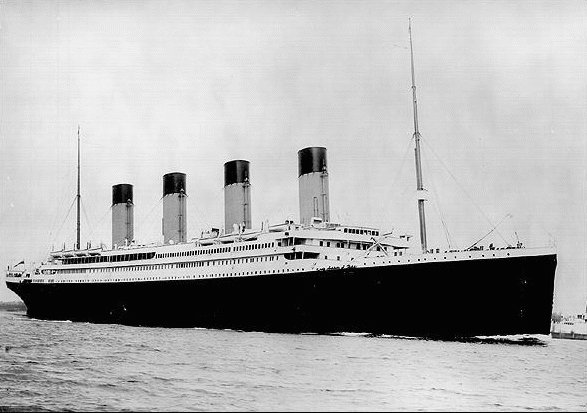
Cruise Ships to Mark Titanic Centenary
![]() |
| Titanic |
With the centenary now just under seven months away, it’s safe to say public interest is reaching fever pitch, especially with news that Downton Abbey writer Julian Fellowes is penning a mini-series to mark the anniversary.
So what better time to launch a second memorial cruise? The Azamara Journey, which can carry 694 passengers, will leave from New York and trace the Titanic’s footsteps in reverse (minus the iceberg collision). It is set to meet the Fred Olsen MC Balmoral cruise ship on the way, which will be following the Titanic’s course to New York from Southampton (also avoiding said iceberg).
The two vessels will cross paths at the exact site of the calamity on April 14, at 2.20am, to pay tribute to the 1,578 men, women and children who lost their lives a century earlier.
The second cruise, which is offering the all-inclusive, eight-night voyage from £4,419 per person, has been hurriedly put together due to popular demand, but the somewhat morbid idea has certainly had its detractors.
Miles Morgan, managing director of Miles Morgan Travel, has insisted the trip is designed to be ‘a commemoration not a ghoulish recreation of the original journey.’
Either way, on the anniversary you’ll find us watching the ITV mini-series from the comfort of our sofa, rather than tempting fate…
Utah Commemorating 'Thelma & Louise' Anniversary
USA Today: Has it really been 20 years since Thelma and Louise lit out from Arkansas and landed in a suicide plunge off the Grand Canyon in what is certainly one of the all-time great buddy/road trip movies?
Most of the location scenes were shot in Utah and a couple of locales there are marking the occasion this week. In Salt Lake City, actress Geena Davis, who co-starred with Susan Sarandon, will appear at Rose Wagner Performing Arts Center in a conversation with Utah Tourism director Leigh Von der Esch. After a screening of the movie, producer Mimi Polk Gitlin will participate in a discussion about the film.
On Thursday, the show moves to Moab, where many of the film's memorable red-rock scenes were shot. A free screening is set for Thursday night at Star Hall, followed by a discussion including Gitlin and Von der Esch.
A number of promotions are tied to the anniversary, including a Girlfriend Getaway at Sorrel River Ranch in Moab. (Leave your guns at home, girls.)
The movie, about two friends who become accidental outlaws after one shoots a would-be rapist, earned six Academy Award nominations. It also helped put Moab on the tourist map, though the area had previously had its share of on-screen close-ups, from John Wayne westerns to Marlboro Man commercials.
More recently, the raw landscape played a starring role in 127 Hours, the true story of hiker Aron Ralston, who was forced to amputate his own arm in May 2003 after being trapped for five days in a remote slot canyon.
Echoes of that tragedy occurred earlier this month when 64-year-old Amos Richards fell 10 feet, breaking his leg in Little Blue John Canyon, the same area in which Ralston was trapped, the Salt Lake Tribune reported. The Concord, N.C., man, equipped with five liters of water and two power bars but no map, crawled through the desert for four days and three nights. National Park Service rangers began a search after spotting his abandoned campsite. They rescued him on Sept. 12 and said he's expected to make a full recovery from multiple injuries, the Tribune reported.
Like Ralston, Richards had not told anyone where he was going. That, along with failing to carry adequate water and other essentials, like first-aid supplies, is a common misstep, says Kent Green, a former search and rescue worker in Moab.
"There are so many nooks and canyon crevasses, you could get lost out there forever," he said of Little Blue John Canyon, which lies in some of the region's most remote and rugged terrain. "You'd be surprised how many people come out here and they'll spend $2,000 or $5,000 on a mountain bike, but nothing on a fanny pack full of stuff that could save their life."
Green's No. 1 piece of advice for hikers and cyclists: Always tell someone where you're going. And don't change your plans.
Most of the location scenes were shot in Utah and a couple of locales there are marking the occasion this week. In Salt Lake City, actress Geena Davis, who co-starred with Susan Sarandon, will appear at Rose Wagner Performing Arts Center in a conversation with Utah Tourism director Leigh Von der Esch. After a screening of the movie, producer Mimi Polk Gitlin will participate in a discussion about the film.
On Thursday, the show moves to Moab, where many of the film's memorable red-rock scenes were shot. A free screening is set for Thursday night at Star Hall, followed by a discussion including Gitlin and Von der Esch.
A number of promotions are tied to the anniversary, including a Girlfriend Getaway at Sorrel River Ranch in Moab. (Leave your guns at home, girls.)
The movie, about two friends who become accidental outlaws after one shoots a would-be rapist, earned six Academy Award nominations. It also helped put Moab on the tourist map, though the area had previously had its share of on-screen close-ups, from John Wayne westerns to Marlboro Man commercials.
More recently, the raw landscape played a starring role in 127 Hours, the true story of hiker Aron Ralston, who was forced to amputate his own arm in May 2003 after being trapped for five days in a remote slot canyon.
Echoes of that tragedy occurred earlier this month when 64-year-old Amos Richards fell 10 feet, breaking his leg in Little Blue John Canyon, the same area in which Ralston was trapped, the Salt Lake Tribune reported. The Concord, N.C., man, equipped with five liters of water and two power bars but no map, crawled through the desert for four days and three nights. National Park Service rangers began a search after spotting his abandoned campsite. They rescued him on Sept. 12 and said he's expected to make a full recovery from multiple injuries, the Tribune reported.
Like Ralston, Richards had not told anyone where he was going. That, along with failing to carry adequate water and other essentials, like first-aid supplies, is a common misstep, says Kent Green, a former search and rescue worker in Moab.
"There are so many nooks and canyon crevasses, you could get lost out there forever," he said of Little Blue John Canyon, which lies in some of the region's most remote and rugged terrain. "You'd be surprised how many people come out here and they'll spend $2,000 or $5,000 on a mountain bike, but nothing on a fanny pack full of stuff that could save their life."
Green's No. 1 piece of advice for hikers and cyclists: Always tell someone where you're going. And don't change your plans.
Hotel Industry Outlook Beginning to Brighten
USA Today: The doom-and-gloom attitude that's plagued the hotel industry for about three years is starting to lift.
During the annual Phoenix Lodging Conference last week, hotel developers, executives, designers and financiers huddled in discussions over possible deals — something not seen since the financial crisis.
"There was more positive activity at this year's event than last year's," says Nancy Johnson, an executive vice president at Carlson Hotels, which runs Radisson, Radisson Blu and Country Inns & Suites brands.
A prime reason why hotel development sank was financing dried up after Lehman Bros. crashed in September 2008, sending the globe into a financial crisis and keeping travelers at home.
"The pall of the recession has psychologically passed, if not financially passed," says Hotel Interactive's Glenn Haussman. "Everyone realizes it's time for things to happen."
But the financial pall may be lifting, too.
A senior executive with GE Capital's hotel financing arm told the audience that the giant is hiring sales people, and he invited them to call for loans.
"If you haven't heard from GE in a while, you're going to," said Scott Andrews, senior vice president of GE Capital's franchise finance. "We are fully back in the market."
Other signals of optimism:
•Budget hotel company Choice Hotels International just announced deals to build three locations of Cambria Suites — Choice's most upscale brand — in Washington, D.C., Houston and White Plains, N.Y.
Those are urban markets where it's easier to get new hotels financed, Choice Hotels CEO Steve Joyce says. "We are out providing significant seed capital to get deals over the finish line because we're sensing now is the right time," he says.
Choice also has started helping owners of its budget Sleep Inn hotels finance renovations.
•The Country Inns & Suites chain, specifically, signed twice as many hotel deals this year as last year, Johnson says. That exceeded expectations, although it's still not back to pre-recession levels. Most of the deals are conversions because financing has been lacking. But one deal will mean a new Country Inn in Port Orange, Fla., near Daytona.
•Major West Coast hotel developer R.D. Olson plans to open four new limited-service hotels in the next nine months. It's also working on a full-service hotel in San Diego, CEO Bob Olson says. With construction costs down as much as 30% from four years ago, he says, "It's an incredibly opportune time to build in certain markets."
The company invested in the four hotels that are slated to open, he says.
Some of the optimism stems from improving forecasts from hotel prognosticators. Revenue that hotels get per available room at the end of this year is expected to be 7.2% higher ($60.54) and rise an additional 7.3% in 2012, according to PKF Hospitality Research.
The average daily room rate this year in U.S. hotels is expected to reach $101 by year's end, a 3% gain. An additional 5% gain is expected next year, PKF says.
Still, any rebound in the hotel industry depends on the market.
For instance, at the Arizona Biltmore, the Waldorf Astoria-affiliated hotel where the conference was, average daily rates remain as much as $85 below pre-recession levels, says Andrew Stegen, the hotel's general manager.
During the annual Phoenix Lodging Conference last week, hotel developers, executives, designers and financiers huddled in discussions over possible deals — something not seen since the financial crisis.
"There was more positive activity at this year's event than last year's," says Nancy Johnson, an executive vice president at Carlson Hotels, which runs Radisson, Radisson Blu and Country Inns & Suites brands.
A prime reason why hotel development sank was financing dried up after Lehman Bros. crashed in September 2008, sending the globe into a financial crisis and keeping travelers at home.
"The pall of the recession has psychologically passed, if not financially passed," says Hotel Interactive's Glenn Haussman. "Everyone realizes it's time for things to happen."
But the financial pall may be lifting, too.
A senior executive with GE Capital's hotel financing arm told the audience that the giant is hiring sales people, and he invited them to call for loans.
"If you haven't heard from GE in a while, you're going to," said Scott Andrews, senior vice president of GE Capital's franchise finance. "We are fully back in the market."
Other signals of optimism:
•Budget hotel company Choice Hotels International just announced deals to build three locations of Cambria Suites — Choice's most upscale brand — in Washington, D.C., Houston and White Plains, N.Y.
Those are urban markets where it's easier to get new hotels financed, Choice Hotels CEO Steve Joyce says. "We are out providing significant seed capital to get deals over the finish line because we're sensing now is the right time," he says.
Choice also has started helping owners of its budget Sleep Inn hotels finance renovations.
•The Country Inns & Suites chain, specifically, signed twice as many hotel deals this year as last year, Johnson says. That exceeded expectations, although it's still not back to pre-recession levels. Most of the deals are conversions because financing has been lacking. But one deal will mean a new Country Inn in Port Orange, Fla., near Daytona.
•Major West Coast hotel developer R.D. Olson plans to open four new limited-service hotels in the next nine months. It's also working on a full-service hotel in San Diego, CEO Bob Olson says. With construction costs down as much as 30% from four years ago, he says, "It's an incredibly opportune time to build in certain markets."
The company invested in the four hotels that are slated to open, he says.
Some of the optimism stems from improving forecasts from hotel prognosticators. Revenue that hotels get per available room at the end of this year is expected to be 7.2% higher ($60.54) and rise an additional 7.3% in 2012, according to PKF Hospitality Research.
The average daily room rate this year in U.S. hotels is expected to reach $101 by year's end, a 3% gain. An additional 5% gain is expected next year, PKF says.
Still, any rebound in the hotel industry depends on the market.
For instance, at the Arizona Biltmore, the Waldorf Astoria-affiliated hotel where the conference was, average daily rates remain as much as $85 below pre-recession levels, says Andrew Stegen, the hotel's general manager.
Is Boeing's Dreamliner a Game Changer?
After three years of delays, Boeing has delivered its first 787 Dreamliner to Japan's All Nippon Airlines. The $200 million plane is scheduled to head for Tokyo today.
Will Dreamliner change air travel? Boeing says yes, but not everyone is convinced.
Video:
Will Dreamliner change air travel? Boeing says yes, but not everyone is convinced.
Video:
Monday, September 26, 2011
Fact Checking ABC's 'Pan Am'
MSNBC: How does the "Pan Am" television series compare with real life travel?
If you watched the Sunday night premiere of "Pan Am," you might be wondering if the idyllic version of 1960s air travel matches the reality of those who worked for the iconic airline.
Overhead Bin wondered, too. So we asked two former Pan Am flight attendants to watch the show and tell us if their experiences were anything like those portrayed on-screen.
Bronwen Roberts was hired at Pan Am in 1958 shortly after graduating England’s University of Leeds with a degree in French. She flew until 1989 and kept in a scrapbook the advertisement listing the 15 qualifications required of flight attendant applicants. “You had to have a pleasant personality and speaking voice, excellent health and you had to be single,” said Roberts. “Really single. Not widowed, divorced or separated.”
A weight between 110 and 135 pounds was another qualification. Roberts said the pre-flight weigh-ins and grooming inspections depicted on the show were true-to-life.
“When you checked in for a flight you’d go into the office and there’d be a grooming supervisor on duty all the time,” said Roberts. “She could say, ‘Your hair is too long’ or ‘You are overweight’ and send you home until you fixed it. Just like the TV show, you could get grounded for uniform violations.”
Helen Davey also found the on-screen grooming checks familiar. Now a psychotherapist in Los Angeles, she was hired as a Pan Am flight attendant in 1965 at age 21 and flew until 1986.
“Yes, we had to wear girdles,” said Davey. “And if you were one minute late for a trip, they’d send you home.”
In the first episode, a child is escorted into the cockpit mid-flight to visit the pilots. Passengers are also offered ashtrays so they can smoke. Roberts and Davey both said that those in-flight activities were once very common.
“We definitely took children into the cockpit so they could sit in the pilot’s seat,” said Roberts. “And in terms of smoking, we’d have little packets of cigarettes and matches that we’d go around with.”
“Even flight attendants could smoke,” added Davey. “But when they did, they had to be sitting down.”
In the episode (spoiler alert), two of the flight attendants are shown doing work for the CIA. If this seems like the least plausible story line, Roberts and Davey both said it was realistic.
“That is definitely a true story,” said Roberts, who during her tenure heard rumors that at least one flight attendant was involved with the CIA. “At one point she just disappeared. No one knew what happened to her.”
In fact, Nancy Hult Ganis, an executive producer for the show and a former Pan Am flight attendant, told wired.com that her research turned up stories about the airline’s involvement with State Department operations on behind-the-scene missions in dangerous locations.
The TV program also shows flight attendants with plenty of time to chit-chat, and at least one crew member involved in an off-duty affair with a passenger.
“Some of those flights were quite long – 15 or 20 hours – and there were fewer people, so you could get to know them,” said Roberts. “People weren’t glued to their laptops like they are now. And some people did end up marrying passengers they met on flights."
Roberts and Davey had only a few quibbles with the first episode. Both said their uniforms were a warmer, more subdued shade of blue than those worn by the TV actresses and that flight attendants in their day would never be allowed to have hair touching their shoulders.
But there’s one moment that Davey said was spot on. “I liked the scene when they were ready for take-off and one flight attendant says to the new hire, ‘Buckle up. Adventure calls.’ That’s how it was. We all thought we had lucked into the best job into the world.”
If you watched the Sunday night premiere of "Pan Am," you might be wondering if the idyllic version of 1960s air travel matches the reality of those who worked for the iconic airline.
Overhead Bin wondered, too. So we asked two former Pan Am flight attendants to watch the show and tell us if their experiences were anything like those portrayed on-screen.
Bronwen Roberts was hired at Pan Am in 1958 shortly after graduating England’s University of Leeds with a degree in French. She flew until 1989 and kept in a scrapbook the advertisement listing the 15 qualifications required of flight attendant applicants. “You had to have a pleasant personality and speaking voice, excellent health and you had to be single,” said Roberts. “Really single. Not widowed, divorced or separated.”
A weight between 110 and 135 pounds was another qualification. Roberts said the pre-flight weigh-ins and grooming inspections depicted on the show were true-to-life.
“When you checked in for a flight you’d go into the office and there’d be a grooming supervisor on duty all the time,” said Roberts. “She could say, ‘Your hair is too long’ or ‘You are overweight’ and send you home until you fixed it. Just like the TV show, you could get grounded for uniform violations.”
Helen Davey also found the on-screen grooming checks familiar. Now a psychotherapist in Los Angeles, she was hired as a Pan Am flight attendant in 1965 at age 21 and flew until 1986.
“Yes, we had to wear girdles,” said Davey. “And if you were one minute late for a trip, they’d send you home.”
In the first episode, a child is escorted into the cockpit mid-flight to visit the pilots. Passengers are also offered ashtrays so they can smoke. Roberts and Davey both said that those in-flight activities were once very common.
“We definitely took children into the cockpit so they could sit in the pilot’s seat,” said Roberts. “And in terms of smoking, we’d have little packets of cigarettes and matches that we’d go around with.”
“Even flight attendants could smoke,” added Davey. “But when they did, they had to be sitting down.”
In the episode (spoiler alert), two of the flight attendants are shown doing work for the CIA. If this seems like the least plausible story line, Roberts and Davey both said it was realistic.
“That is definitely a true story,” said Roberts, who during her tenure heard rumors that at least one flight attendant was involved with the CIA. “At one point she just disappeared. No one knew what happened to her.”
In fact, Nancy Hult Ganis, an executive producer for the show and a former Pan Am flight attendant, told wired.com that her research turned up stories about the airline’s involvement with State Department operations on behind-the-scene missions in dangerous locations.
The TV program also shows flight attendants with plenty of time to chit-chat, and at least one crew member involved in an off-duty affair with a passenger.
“Some of those flights were quite long – 15 or 20 hours – and there were fewer people, so you could get to know them,” said Roberts. “People weren’t glued to their laptops like they are now. And some people did end up marrying passengers they met on flights."
Roberts and Davey had only a few quibbles with the first episode. Both said their uniforms were a warmer, more subdued shade of blue than those worn by the TV actresses and that flight attendants in their day would never be allowed to have hair touching their shoulders.
But there’s one moment that Davey said was spot on. “I liked the scene when they were ready for take-off and one flight attendant says to the new hire, ‘Buckle up. Adventure calls.’ That’s how it was. We all thought we had lucked into the best job into the world.”
'Pan Am' Review: Bouncy Hair and Aviation History
Jaunted: So, did you watch the premiere episode of ABC's Pan Am last night? It seems like half the world did, from the way Twitter was blowing up about it. Of course you can't go about judging a show from its premiere eppy—it's like judging a book by its heavily-financed cover—but we'll attempt to anyway.
Yesterday evening, we were introduced to Maggie, Kate, Colette, Laura, Dean and Ted. Their complexions are perfect, their Pan Am crew uniforms perfectly starched and their curiosity for the world genuine. Alas, it's not just because they are actors, but because this is the truth of what it was really like back in the heyday of the jet age. Also it's worth noting their hair is very bouncy.
Beyond appearances, the show actually makes an effort to touch on real history, as the premiere featured the first flight of the Clipper Majestic from New York to London. Nevermind that there was no Clipper named Majestic, the story the show attempts to tell is rooted in fact. We particularly loved all the shots of the Boeing 707 and glimpses of vintage airline interiors, naturally created on a soundstage but so realistic that we wish the ABC Pan Am set crew would have a hand in fitting a current plane with a retro interior for a special route. We can dream.
Now perhaps we should have seen this coming: Jetsetter has partnered with ABC's Pan Am for a curated selection of hotel sales. They've just launched the first bunch in London—keeping with the premiere's theme—and there'll be five more coming up, though all for US cities.
Yesterday evening, we were introduced to Maggie, Kate, Colette, Laura, Dean and Ted. Their complexions are perfect, their Pan Am crew uniforms perfectly starched and their curiosity for the world genuine. Alas, it's not just because they are actors, but because this is the truth of what it was really like back in the heyday of the jet age. Also it's worth noting their hair is very bouncy.
Beyond appearances, the show actually makes an effort to touch on real history, as the premiere featured the first flight of the Clipper Majestic from New York to London. Nevermind that there was no Clipper named Majestic, the story the show attempts to tell is rooted in fact. We particularly loved all the shots of the Boeing 707 and glimpses of vintage airline interiors, naturally created on a soundstage but so realistic that we wish the ABC Pan Am set crew would have a hand in fitting a current plane with a retro interior for a special route. We can dream.
Now perhaps we should have seen this coming: Jetsetter has partnered with ABC's Pan Am for a curated selection of hotel sales. They've just launched the first bunch in London—keeping with the premiere's theme—and there'll be five more coming up, though all for US cities.
The Dazzling Physics of the Boeing 787's Engines
Seattle Times: What metallic object spins at supersonic speeds, about 900 mph, and operates at a temperature half as hot as the sun?
The 787's Rolls-Royce engine.
Actually, any modern jet engine approaches this astonishing performance. The Rolls-Royce Trent 1000 powering the Dreamliner is just the most efficient example being produced today.
Bill Boyd, the new head of Rolls-Royce's Boeing support office in Seattle, just gave a briefing on the engine that began with the utterly dazzling engineering behind the engine.
Steel starts to glow red at 1,292 degrees F, but inside the engine core the temperature reaches higher than 3,000 degrees F. Somehow the engineers contrive with special coatings and heat distribution to prevent the metal from melting.
Meanwhile the tips of the hollow titanium fan blades at the front are spinning at 900 mph. At take-off, the force on each blade is equivalent to hanging a freight train off the blade, Boyd said.
And inside the core, many little three-inch blades turn, each one producing as much power as a NASCAR auto in an environment that is beyond the melting point of the metal.
It's physics that seems like magic.
The Rolls-Royce engine is certified to fly 5.5 hours ETOPS (i.e. the plane is certified to fly that long with one engine out.)
And while the 787 is in service, a team of Rolls-Royce engineers will monitor the engines while in flight via a radio frequency data communications and detect any degradation in performance that might need to be dealt with upon landing.
The Dreamliner's Trent 1000, Boyd said, is "the most efficient, highest technology production engine in the world today."
The 787's Rolls-Royce engine.
Actually, any modern jet engine approaches this astonishing performance. The Rolls-Royce Trent 1000 powering the Dreamliner is just the most efficient example being produced today.
Bill Boyd, the new head of Rolls-Royce's Boeing support office in Seattle, just gave a briefing on the engine that began with the utterly dazzling engineering behind the engine.
Steel starts to glow red at 1,292 degrees F, but inside the engine core the temperature reaches higher than 3,000 degrees F. Somehow the engineers contrive with special coatings and heat distribution to prevent the metal from melting.
Meanwhile the tips of the hollow titanium fan blades at the front are spinning at 900 mph. At take-off, the force on each blade is equivalent to hanging a freight train off the blade, Boyd said.
And inside the core, many little three-inch blades turn, each one producing as much power as a NASCAR auto in an environment that is beyond the melting point of the metal.
It's physics that seems like magic.
The Rolls-Royce engine is certified to fly 5.5 hours ETOPS (i.e. the plane is certified to fly that long with one engine out.)
And while the 787 is in service, a team of Rolls-Royce engineers will monitor the engines while in flight via a radio frequency data communications and detect any degradation in performance that might need to be dealt with upon landing.
The Dreamliner's Trent 1000, Boyd said, is "the most efficient, highest technology production engine in the world today."
Converted Oil Rig Escape Pods Now Hotel Rooms
Daily Mail: Looking for a weekend retreat that's perfect for an escape? Here's a hotel that's built just for the job.
Holidaymakers are now being offered the chance to stay in an oil rig survival capsule. The bright orange pods have undergone an incredible transformation and are now available to tourists for 60 Euros ($81) a night.
Kitted out with lights, a survival suitcase and sleeping bags and guests can choose between simple hammocks or a normal bed in their pods. Some of the more luxurious designs contain a water boiler and, bizarrely, karaoke sets.
Creator oil rig even fitted one with a James Bond theme - like the one featured in the film The Spy Who Loved Me. The capsule includes several of the films on DVDs, silk sheets on the bed, champagne and a vodka martini bar.
Tourists with a sense of adventure are now clamoring to spend the night in the rooms, which measure just 14ft across. Mr Oudendijk, who lives in the Hague, in the Netherlands, said: 'Since we launched them, the pods have been very popular - they've even saved some relationships.'
The 44-year-old designer stumbled across the pods for sale on the internet while looking for a boat. He explained: 'I was planning to travel over Europe's waters by boat looking for waste to turn in to re-usable objects. I was looking for an enclosed boat for me which could function as a house and a research laboratory. Then I found the survival capsules on the internet and had the idea for the hotels. Each have been adapted differently. Some are simply fitted with a hammock made from a fishing net. But in one I took out the whole engine space and put in a normal bed.'
'They come with lights, survival suitcases, sleeping bags, and some even have a waterboiler and karaoke set depending on the location. Once I had a James Bond meets Barbarella arrangement and the capsule came with Bond DVDs, silk sheets, champagne and a vodka martini bar.'
The capsules are currently available in Scheveningen, in the Hague, and the Verbeke Foundation in Belgium. Two others are also currently being renovated and will soon be deployed to new locations. Mr Oudendijk has stayed in the capsules himself and describes the experience as fun.
He added: 'It's great having your own little survival capsule. I've stayed in one for a month with my girlfriend in Nantes, France, and it was very comfortable.'
Holidaymakers are now being offered the chance to stay in an oil rig survival capsule. The bright orange pods have undergone an incredible transformation and are now available to tourists for 60 Euros ($81) a night.
Kitted out with lights, a survival suitcase and sleeping bags and guests can choose between simple hammocks or a normal bed in their pods. Some of the more luxurious designs contain a water boiler and, bizarrely, karaoke sets.
Creator oil rig even fitted one with a James Bond theme - like the one featured in the film The Spy Who Loved Me. The capsule includes several of the films on DVDs, silk sheets on the bed, champagne and a vodka martini bar.
Tourists with a sense of adventure are now clamoring to spend the night in the rooms, which measure just 14ft across. Mr Oudendijk, who lives in the Hague, in the Netherlands, said: 'Since we launched them, the pods have been very popular - they've even saved some relationships.'
The 44-year-old designer stumbled across the pods for sale on the internet while looking for a boat. He explained: 'I was planning to travel over Europe's waters by boat looking for waste to turn in to re-usable objects. I was looking for an enclosed boat for me which could function as a house and a research laboratory. Then I found the survival capsules on the internet and had the idea for the hotels. Each have been adapted differently. Some are simply fitted with a hammock made from a fishing net. But in one I took out the whole engine space and put in a normal bed.'
'They come with lights, survival suitcases, sleeping bags, and some even have a waterboiler and karaoke set depending on the location. Once I had a James Bond meets Barbarella arrangement and the capsule came with Bond DVDs, silk sheets, champagne and a vodka martini bar.'
The capsules are currently available in Scheveningen, in the Hague, and the Verbeke Foundation in Belgium. Two others are also currently being renovated and will soon be deployed to new locations. Mr Oudendijk has stayed in the capsules himself and describes the experience as fun.
He added: 'It's great having your own little survival capsule. I've stayed in one for a month with my girlfriend in Nantes, France, and it was very comfortable.'
Subscribe to:
Posts (Atom)