*** PLEASE VISIT OUR NEW AND IMPROVED NEWS WEBSITE. CLICK HERE

Friday, October 28, 2011

Positive Winter Travel Trends

Travel Agent Central: Consumers are spending more time planning their winter trips and they are planning their vacations farther out, Tripology, Rand McNally’s online travel referral service, reports. The new Third Quarter Travel Trend Report also shows travelers spending more money on their winter and holiday vacations when compared with the average trip budgets reported in the summer and fall. The Travel Trend Report also provides insight into the top requested travel destinations for winter 2012.

Key findings from the 2011 Third Quarter Travel Trend report are as follows:

- The Top Five Most Requested Countries since January 2011 have been: U.S., Mexico, Italy, Bahamas and Jamaica

- The Top Five Most Requested Cities (for the 3rd quarter in a row) are: Las Vegas, Orlando, Cancun, Miami and Honolulu

- The Average Consumer Budget has risen to $5,710 per trip. This is a steady increase from the first quarter 2011, when the average consumer trip budget was $5,239 per trip. The average consumer trip budget during the winter travel season also increased considerably last year, rising from $4,784 in Q1 to approximately $5,663 per trip in Q3

- The number of days until trip departure (the amount of time between quote request and beginning of trip) increased to 130 days. This was a similar trend in Q3 2010, indicating that consumers tend to spend more time planning their vacations and plan their trips farther out during the winter and holiday travel period

- The most popular winter trip length is between three and four days, the second most popular trip length is four to five days and the third is a trip between seven and eight days. Over 76 percent of travelers’ requests were for a trip duration of fewer than eight days, which was similar to last year’s findings.

“Overall our Third Quarter Trend Report reveals a positive outlook for the winter travel season, as consumers continue to increase their trip budgets as well as their advanced planning of trips during this time of the year,” said John T. Peters, vice president and general manager of digital strategy and travel of Rand McNally.

“Because these trends show that consumers are spending more money and time planning their winter vacations compared to the summer and fall months, it also suggests that a greater number of consumers are currently seeking out the expertise and services of travel professionals to help them maximize their winter trip budgets and plan truly memorable vacations that they are willing to spend a little extra money on," Peters said.

Additionally, the Tripology Trend Report reveals the following Tripology.com stats:

- The demand for travel to Asia increased each month during Q3 2011

- Paris and Rome show enduring popularity for travelers to Western Europe

- Punta Cana is the most requested Caribbean winter travel destination

- The Top Ten Most Requested U.S. Cities are: Las Vegas, Orlando, Miami, Honolulu, Maui, Los Angeles, San Francisco, New York, New Orleans and Boston. The top requested U.S. cities were relatively the same in 2010, with the exception of Boston, a newcomer to the top ten most requested list.

The Tripology Trend Report is sponsored by the Association of Travel Marketing Executives, and is published quarterly by Tripology, a service of Rand McNally.

More Hotels Opening in Airports

Yotel Rooms at Heathrow Airport
MSNBC: The days of snoozing upright in an airport terminal chair during that long layover may soon be over. At some of the world’s busiest airports, travelers can book a hotel room to catch a nap or take a warm shower — all just minutes from the runway.
 
“We sell our cabins literally by the hour. You book only what you need,” said Jo Berrington, marketing manager for Yotel, a no-frills hotel chain now in London’s Heathrow airport, London’s Gatwick airport and Amsterdam’s Schiphol airport. Yotel’s rooms are a mere 75 square feet, with just enough room for a bed, desk and shower.

Travelers can check in and out of the capsule-like rooms at any time of the day. A four-hour block of time costs about $45, and an overnight stay costs about $90. The U.K.-based Yotel expects to have five more in-airport hotels in the works within the next year, including a proposal for New York’s John F. Kennedy International Airport.

Airport lodging has been around for years, offering a bed to travelers with late-night arrivals or early departures — or stranded due to bad weather. There’s the Hyatt Regency inside the Orlando airport, the Marriott in the Tampa airport and The Sheraton in the Bradley airport in Windsor Locks, Conn.

But things are starting to change, as airports continue to evolve into centers of commerce with bars, restaurants and shopping, said Scott Berman, the U.S. leader of hospitality and leisure at PricewaterhouseCoopers. “There has been a rapid expansion of hotel development in and around the busiest airports,” said Berman.

It’s not limited to no-frills. New luxury hotels are popping up at airports, complete with spa services, cigar bars and exercise rooms.

Last year, Hilton Hotels & Resorts opened a 320-room hotel inside Terminal 3 of the Beijing Capital Airport in China. The hotel has seven restaurants and bars, two ballrooms, 21 meeting rooms and spa services, a cigar bar and fitness center.

The Hilton chain expects to open hotels at JFK airport in New York and the Frankfurt airport in Germany in December and three more hotels inside airports in Nigeria, in Ghana and in Alberta, Canada, by 2014.

Last spring, Sheraton Hotels & Resorts opened a hotel inside the Milan Malpensa Airport in Italy and by the end of next year, Sheraton will add more hotels adjacent to airports internationally in Azerbaijan and Moscow and domestically in Detroit and Pittsburgh. Meeting and conference rooms will be included. “You will have business travelers fly in, do business and never venture into the city,” said Hoyt Harper, Sheraton’s global brand leader. “Convenience is very important.”

Passenger Plane Crashes on Busy Vancouver Street

Daily Mail: A small aeroplane crashed on a busy Canadian city street injuring all nine aboard - but miraculously no one was killed. The plane broke in half and burst into flames as it hit the ground near Vancouver International Airport yesterday afternoon.

Three people, two of them believed to be crew members, are critically ill. A person on the ground was also injured in the crash and taken to hospital.

The Beech King Air 100 caught fire after it came to rest on a street just 900 metres from the airport. Witness Steven Baran told CBC News that the aircraft slammed onto the road and slid into a car before stopping. Baran, who works for the post office at the airport, said no-one in the car appeared to be hurt and his first instinct was to help the plane passengers.

He said he and other witnesses 'made a beeline for the plane'.

He said: 'The rear door was ajar and one of the fellows pulled it down. One after another, we just pulled passengers out real quick.'

Alyssa Polinsky, spokesman for Vancouver Coastal Health, said three people were taken to Vancouver General Hospital in critical condition, while three more were stable. Another three people were taken to the nearby Richmond General Hospital with injuries considered to be non-life threatening.

A pedestrian was also sent to hospital after being struck by a flying object. The person's condition was unknown. Two people in a car were also reported to have suffered minor injuries.

'We have everything from burns to fractures and back injuries,' Miss Polinsky said in an interview, adding she had no information on any identities.

The plane can carry up to nine passengers.

'The plane's basically broken in half, as far as I can see,' said Graeme Wallace, who works at a nearby pilot supply store. He said about half of the plane was burning, but emergency crews put out the fire.

The plane, operated by British Columbia-based Northern Thunderbird Air, was bound for Kelowna.

Bill Yearwood, from the Transportation Safety Board of Canada, said the flight took off at 3.40pm but turned around when the crew got the 'indication of a problem' about 15 minutes after take-off. The aircraft did not make it back to the airport, crashing on Russ Baker Way in Richmond, about 900 metres short of the runway.

In an audio recording, obtained by CBC News, the pilot can be heard telling air traffic control that he is declaring an emergency and turning back to Vancouver, but is confident he can reach the airfield. The air traffic controller asks the pilot to confirm whether he 'doesn't need equipment or help' on the runway.

The pilot calmly responds: 'Negative, everything's good here at the moment'.

Visibility was good with clear skies at the time of the crash, CBC meteorologist Claire Martin said. An airport statement said the Vancouver Airport Authority went into emergency mode at 4.12pm local time.

A database run by the Flight Safety Foundation shows Northern Thunderbird Air had two deadly small-plane crashes in 1975 and 1977.

Video:

Hotel Occupancy Predicted to Increase 5% Over Next Year

USA Today: Travelers in the coming year should prepare to pay higher rates and compete for the best rooms, a new analysis of future hotel bookings suggests.

Occupancy nationwide is expected to increase by about 5% and rates by about 4%, according to industry tracker TravelClick's analysis of North American hotel bookings for the 12 months ending Sept. 30, 2012.

"While there is much uncertainty regarding where the overall economy is headed, hotel industry performance over the remainder of 2011 and heading into 2012 continues to look strong," said Tim Hart, a TravelClick executive vice president.

The gains should please hotel owners, who endured steep drops in occupancy and room rates in the recession. Revenue per available room, the industry's key financial measure, is expected to increase by almost 7%, the analysis says.

The recovery will not be across-the-board. Five markets in the next 12 months are expected to see hotel occupancy sink, with Minneapolis-St. Paul (-9%) and Denver (-8%) predicted to fare the worst.

On the other end of the spectrum, a handful are projected to see occupancy gains of 15% or more.

Charlotte is expected to experience a 20% increase in occupancy, followed by 15% gains in Houston, Seattle and Philadelphia, which will mean renewed competition for rooms and perhaps a wait in the check-in line.

It's Detroit, however, that TravelClick predicts will emerge the biggest winner during this period, with an expected 22% increase in occupancy.

"We're well ahead of the curve from a national improvement standpoint," says Thomas Conran, principal of Greenwood Hospitality Group, owner of The Henry hotel in Dearborn, Mich., a Detroit suburb.

Reflecting Detroit's economy, the Henry had previously been a luxury Ritz-Carlton hotel where the auto industry frequently met and had functions, but Conran's group repositioned it last year. Out were the dark-wood-covered walls that gave the hotel its clubby atmosphere. In were a lighter color palette, a vibrant restaurant, reduced room rates and marketing by Marriott's "anti-chain" Autograph Collection. On busy mid-week nights, a guest might today pay about $200 a night — less than during the auto industry's heyday.

But what the Henry lost in rate, it's starting to make up with volume. "There's an energy that this hotel has not seen for many, many years," says Conran.

Conran credits Detroit's recent recovery to the state's efforts to lure more leisure travelers via its Michigan.org website, as well as the success of Detroit's resurgent sports teams, which has helped lure weekend visitors.

Finally, Conran says, the Detroit area is seeing "significant" year-over-year gains in business travel thanks to the recovering auto industry.

"We can't underestimate the fact that the health of the auto industry has improved dramatically," Conran says.

Thursday, October 27, 2011

Did a Biker War Erupt Over a Starbucks?

Seattle Weekly: By all accounts, the Hells Angels and Vagos motorcycle clubs are at war. In a clash between the two gangs last month at a casino in Nevada, the president of the Hells Angels' San Jose Chapter was shot and killed and a Vagos member wounded. A retaliatory drive-by felled a Vagos member the following day, and other skirmishes have spilled blood in California, Arizona, South Dakota, and elsewhere. A report yesterday from Reuters dubbed the ongoing conflict "the biggest biker feud in nearly a decade." But did it really all begin as a turf war over which gang could hang out at their local Starbucks?

On the afternoon of January 27, 2010, two Vagos were cruising through downtown Santa Cruz, California with a third member, 37-year-old Thomas Froberg, following close behind in a Chevy van, according to police testimony quoted in the Santa Cruz Sentinel. The club had recently moved to establish a new chapter in the city -- Hells Angels territory.

The local Hells Angels didn't take kindly to the encroachment. A group spotted the Vagos and took off after them, reportedly on foot. Froberg swerved across three lanes of traffic to cut them off, and jumped out to fight. The bikers wielded ball-peen hammers and crowbars in the melee that followed. At some point, the Hells Angels pinned Froberg to the pavement, ripped his green Vagos shirt and stomped him.

Froberg's buddies eventually came to his rescue, and the group scattered before police arrived on the scene. Froberg was caught a few blocks away, however, and charged with gang participation and fighting in public. His mugshot (pictured above) shows a boot print on his forehead left over from the brawl.

"It was all about who would be allowed to hang out at the Starbucks downtown," Santa Cruz Deputy Police Chief Steve Clark told Reuters. "The Vagos brazenly came in and tried to cement their presence. It was a pretty strong play on their part to establish themselves as the premiere club . . . Only in Santa Cruz would you have biker wars over who's going to control pumpkin spice lattes."

The image of a fearsome pack of Hells Angels swinging crowbars to protect their lattes and unwittingly sparking a nationwide gang war in the process is certainly amusing, but it may not be entirely accurate.

Jorge Gil-Blanco, a retired California cop, now an outlaw motorcycle gang expert with the Western States Information Network, has tracked the escalation of the Vagos-Hells Angels beef and says the bad blood between the gangs can actually be traced to an earlier incident in Orange County that soured historically amicable relations between the clubs.

"They had a major brawl at a swap meet and ended up fighting each other with motorcycle parts," Gil-Blanco tells Seattle Weekly. "Basically after that incident, the Vagos started to expand and said 'Why's everybody so afraid of the Hells Angels?' That was the real turning point."

"I seriously doubt this is all just because of Starbucks," he adds. "The Hells Angels saw the Vagos in downtown and assaulted them. They wanted to show we're the top dog and you guys aren't starting a chapter here. In fact, the Vagos actually pulled out [of Santa Cruz] after that."

Santa Cruz police did not respond to messages inquiring about the city's caffeine-crazed bikers.

Founded in San Bernardino in the 1960s, the Vagos have since expanded to Hawaii, Nevada, Oregon, and Mexico. Gil-Blanco says they don't currently have a presence in Washington. The gang is also known as "Green Nation" for their preferred color, and their mascot is Loki, the Norse god of mischief. But while the green matches the Starbucks cup, the devilish Loki bears little resemblance to the Norse "twin-tailed siren" logo of the Seattle coffee empire.

A Starbucks barista, who answered the phone at the downtown Santa Cruz store but declined to give her name, says she's been working there for several years but can't recall any outlaw biker customers.

"There are motorcycle groups that hang out here," she says, directing further questions to Starbucks corporate headquarters, "but I've never seen any Hells Angels."

The Hotel Made of Salt


Daily Mail: At first glance, you could be forgiven for mistaking these images for a beach house, with the floors dusted in a layer of sand and walls made from stone. But in fact everything in this incredible South American hotel is made from salt - including most of the furniture.

The Hotel de Sal, near Colchani, Bolivia, hosts guests who have come to visit the stunning salt flats where vast expanses of salt lakes give the surreal impression of the earth meeting the sky. Tourists typically stay for a few days to see the natural wonders of Bolivia's most notorious attraction before moving on to the next stop of their journey.

For £84 ($135) a night, lodgers can rent a double room - complete with their own salt bed of course - and breakfast.

Tour guide Pedro Pablo Michel Rocha, of Hidalgo Tours, works with the hotel to provide trips in the south of the country. He said: 'I love it when visitors come to this place for the first time. They can't get over the fact that everything is made out of salt and I've even seen a few people lick the furniture to make sure!'

'It is a wonderful experience to come somewhere like this where they've used the natural materials available to create something like a hotel.'

The infamous salt flats in Salar de Uyuni were formed as a result of transformations between several prehistoric lakes. The plains are covered by a few feet of salt crust which has an unusual flatness and covers a pool of brine which is exceptionally rich in lithium.

Although tourists have long been visiting the area, it wasn't until around five years ago that interest grew in extracting the 5.4m tons of lithium which is found just below the surface of the salt.

The lithium in the area makes up half the world's supply and is used in batteries for mobile phones and computers, as well as being a key element in electric cars.

Steven Tyler vs. the Hotel Shower

Hotel Chatter: “You can't handle the tooth," 63-year-old Steven Tyler joked to Matt Lauer on the Today Show earlier this morning, when the rock star phoned in from South America to explain his recent injury. Apparently, the singer was battling "food poisoning" (yeah right, and his daughter Liv Tyler is actually an Elf Princess) when he lost his balance and fell face first into the shower floor.

Tyler was staying at the Bourbon Hotel in Paraguay, and thanks to his tour manager, located a nearby hospital to stitch up his eye, re-align his face, and fix his broken tooth. Now, that must have been a pretty heavy fall. And knowing what we know, Mr. Tyler can be a little accident prone. So we have to wonder. Who do you think suffered more damage: Steven Tyler's face, or the shower stall?

Aerosmith's lead guitarist, Joe Perry, took to Twitter to support his bandmate the night of the re-scheduled Asuncion concert: "Steven even played harp with his busted lip my mind was blown. He put on one of his best shows ever."

Meanwhile, a bellboy at the hotel, Gustavo Perez, was quoted by The Daily Mail as saying only, "he had a nasty fall." Tyler got a little more specific while on the phone with Matt Lauer, describing:

"I fell on my face. I just passed out and I woke up with the water running on me."

If the hotel has any marketing savvy, they'll leverage this incident to their advantage, just like we've seen over at the Courtyard By Marriott Solana Beach. Steven Tyler Tooth Repair packages, anyone?

Doctor Accused of Prescribing Drugs at Starbucks

OC Register:  A doctor who is charged with illegally prescribing dangerous opiates to people he often met at Starbucks is expected to be arraigned Wednesday.

Alvin Mingczech Yee, 43, of Mission Viejo, was arrested Tuesday night at his Irvine office by Drug Enforcement Administration agents and Orange and Huntington Beach Police Department officers, according to a news release from the U.S. Attorney's Office.

Meanwhile, authorities are looking into the death of a woman in Huntington Beach who got prescriptions from Yee and is thought to have died from an opiate overdose, according to a search warrant affidavit. The document says the Orange County deputy coroner told Huntington Beach investigators he recognized the doctor's name associated with several other overdose deaths he was investigating.

Huntington Beach police Lt. Russell Reinhart said he could not say more because of ongoing investigations.

A 56-count grand jury indictment charges Yee with prescribing drugs, such as oxycodone and hydrocodone, "outside the usual course of professional practice and without a legitimate medical purpose," the release said.

Court documents allege Yee met with numerous "patients," including three undercover operatives, during evening rendezvous at Starbucks across the county and wrote prescriptions for drugs best known by brand names, including OxyContin, Vicodin, Xanax, Adderall and Suboxone.

Authorities searched Yee's home, Irvine office and his car. According to an affidavit in support of the search warrants executed Tuesday, Yee met with up to a dozen people nightly, writing prescriptions for cash.

A DEA investigation found that large quantities of controlled substances were seized and many people arrested in Seattle, Phoenix, and Detroit. Independent investigations into the arrests determined those arrested traveled to Orange County and obtained the opiates from Yee, according to the affidavit.

At least one young adult, identified as Krista Davis, who got large amounts of opiates from the doctor overdosed and died in Huntington Beach in August, the affidavit says.

If convicted, for each of the 50 counts Yee faces up to 20 years in federal prison. Each count of distribution of a controlled substance by a medical practitioner to a minor carries a mandatory minimum penalty of one year and a maximum penalty of 40 years.

Video:

New App Helps Track Loved Ones at Theme Parks

Where's Johnny?
OrlandoSun Sentinel: Parents know how hard it can be to track children at Disneyworld parks or even the local mall. It is easy to lose a child in a crowd, and older children often demand freedom to wander alone to other rides or stores. Now you can worry a little less.

That’s the beauty of the new free Find My Friends app for Apple iPhone and iPad: Via iCloud technology, you can track children, friends, even employees, easily, as long as they have an iPhone or iPad too. It makes it easier for parents to call up exact locations of children – or for friends to find other friends fast.

You also have the option to share your location with others. They can follow you as you move around a theme park or travel from winery to winery in California’s Napa Valley. Users can share their location with a group of people for a few hours, days, or even weeks.

TSA Note Writer Removed From Screening

TheHill: A Transportation Security Administration airport security worker has been removed from checking baggage because of a note with sexual implications he left for a passenger at Newark's Liberty International Airport.

Jill Filipovic, a New York blogger who is also a lawyer, tweeted Monday that a note was left in her bag — which contained a sex toy, according to reports — that said "get your freak on." The note was written on a TSA notice of inspection form, leading Filipovic to believe it was written by someone at airport security.

TSA said on its blog Tuesday that it had conducted an investigation into the incident and removed the employee that was responsible from duty.

"That individual was immediately removed from screening operations and appropriate disciplinary action has been initiated," the agency wrote.

"The handwritten note was highly inappropriate and unprofessional, and TSA has zero tolerance for this type of behavior."

The TSA blog Tuesday also said the agency had issued an apology to Filipovic, who tweeted a picture of the note.

For her part, Filipovic joked in subsequent tweets about the notoriety the incident had brought her.

"Lesson learned: Don't tweet anything you don't want to appear on The View. #FML," she wrote Monday.

"Also, this twitter feed is now reverting to its usual content of wine, cheese, bacon and feminism. Unfollow away," she followed up in a second tweet.

Wednesday, October 26, 2011

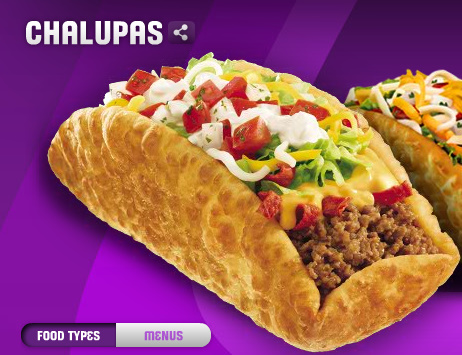
Taco Bell Fire-Bombed For Lack of Meat

Meat Shortage?
WESH: "Where's the beef?" took on a whole different meaning after an unsatisfied customer fire-bombed a Taco Bell in Georgia over too little meat in his Chalupas.

The Molotov cocktail left a large burn mark on the wall under the restaurant's drive-through window, Albany, Ga., TV station WALB reported.

A police officer spotted the small fire just before 5 a.m. Sunday.

The restaurant manager told WALB that an irate customer phoned them a few hours earlier to complain over the lack of meat.

The caller made racial slurs and threatened to "redecorate" the building, police said.

Police said they recovered a melted plastic bottle with what's believed to be gasoline inside.

SeaWorld Whales Named as Plantiffs in PETA Lawsuit

NBC San Diego: The animal rights group PETA filed their official complaint against SeaWorld Inc. early Wednesday morning for allegedly violating the thirteenth amendment rights of orca whales.

The official complaint submitted to the US District Court for Southern California lists five SeaWorld orcas as collective plaintiffs in the case, according to the complaint. Three of those whales live in the San Diego Seaworld park. The other two live in the Orlando location.

The thirteenth amendment abolished slavery in 1865.

PETA alleges that the two SeaWorld locations restrained and kept the whales in “constant involuntary physical confinement,” with no means to escape. The complaint also accuses SeaWorld of depriving the whales of “their ability to live in a manner of their choosing,” and for “intentionally subjugating” the whales’ “wills, desires, and/or natural drives and needs of [SeaWorld Inc.’s] own will and whims.”

A spokesperson for SeaWorld Inc. stated to the Associated Press that the claims were “baseless and offensive.” The statement added that any performances are intended to educate the public and promote conservation of marine animals.

PETA’s complaint lists a number of qualities that orca whales possess, such as their problem-solving abilities and understanding of cooperative networks. The orcas are capable of displaying “physiological and behavioral indicators of stress and trauma,” the complaint reads, and can communicate the stress of living in captivity.


“[SeaWorld’s] confinement of [the orcas] suppresses [the orcas’] cultural traditions and deprives them of the ability to make conscious choices and of the environmental enrichment.”

Under current law, animals are still considered property, according to the Associated Press.

Travel Forecast for 2012

Fox Business: Financial turmoil that has already started to weigh on corporate balance sheets may start to seep into the wallets of business travelers, according to an industry survey set to be released later on Wednesday by American Express.

Travel costs for businesses will continue to increase in 2012 as airlines and hotels squeezed by rising expenses push their fees higher, according to the credit card company’s Global Business Travel Forecast.

Calling business travel essential to global economic performance and an “enabler of business growth,” Christa Degnan Manning, director of Expert Insights research at American Express Global Business Travel, predicts the combination of demand and the pricing pressure on travel suppliers will push rates up in 2012.

“As more and more companies understand the importance of putting people on the road and its criticality to converting prospects, retaining clients, and ultimately driving growth, particularly in emerging nations, we expect to see travel prices go up,” Manning said.

Airfare has already been rising as airlines increase fares to offset sharply higher jet fuel costs and ailing demand. As major U.S. carriers such as AMR’s American Airlines and Delta Air Lines reduce capacity heading into next year, reduced supply will likely lift fares higher, even in the face of a potential economic slowdown, according to the AMEX forecast.

North America short-haul economy fares could be up 3% to 5%, with North America long-haul prices for economy passenger climbing 0.5% to 3.5%, AMEX said. For business class, short-haul prices are slated to rise 5% to 7%, while long-haul could be up 3% to 5%.

Hotel prices are also slated to increase, albeit slightly, the survey notes, building on gains that began this year as those suppliers aimed to reach pre-recession room-rate levels.

“Hoteliers increasingly seek to remove these from contracted rates to drive their own revenue-generated opportunities next year,” Manning said.

AMEX warned that price increases will vary depending on location and suggested companies looking to keep costs in check calculate the value of services offered by hotels that help improve employee productivity, such as Internet connectivity and business center usage.

In Europe, the Middle East and Africa, hotel rates are expected to increase conservatively, however there will likely be declines in Spain and Greece that are facing particularly tough financial turmoil.

In Latin America, airfare is expected to increase by as much as 6% to 9% for business short-haul fliers and 5% to 8% for long-haul fliers. The hotel market down there is also projected to have moderate increases, particularly in the business hubs of Buenos Aires, Mexico City, Santiago and Rio De Janerio.

As companies continue to look toward Asia’s emerging markets for new business, the region is once again expected to lead business travel demand. Pricing for business-class short-haul fliers is slated to rise 2% to 6%, while those for long-haul passengers could be up as much as 6% to 10%.

In Asia, the uptick in business travel will inevitably weigh on hotel prices, AMEX said, however prices will likely fall in certain cities such as Shanghai, which has an excess of capacity after building more than enough hotels after its Expo 2010.

Why Companies Keep Traveling
Even with the higher price, though, companies are expected to continue traveling.

“There’s a link between travel and a company’s top-line growth,” said Alicia Tillman, vice president of global communications marketing services for American Express’ global business travel.

In an earlier AMEX survey, the company found that companies that utilize business travel estimate that they won over roughly 50% of their perspective customers through face-to-face contact, compared with just 31% without in person meetings.

“Despite emerging technologies that can serve as alternatives to travel, nothing really replaces what you gain with those in person interactions,” Tillman said, noting that travel is seen as a competitive advantage and helps build client relationships.

At the height of the nation’s latest economic recession, many companies started to slash travel budgets, which are typically one of the top two or three expenses after human capital and technology. However, AMEX noted that those companies that held onto the person-to-person client relationships realized stronger and more profitable growth than those that cut the budget out completely.

Of course, there are alternatives to travel such as telepresence and virtual meetings. And while AMEX says companies should avoid those less personal meetings with clients, it encourages cost-efficient technology-enabled meetings for inter-office affairs.

One of the best ways to tackle immense travel costs is to “managing spending more strategically,” Tillman said.

She suggested companies invest in sophisticated reporting tools so that they can keep tabs on employees spending habits while traveling on the job to ensure the money being spent is not on non-critical things outside of policy.

JetBlue Announces 'Concierge on Call'

Jaunted: Browsing winter vacation deals yet? Drooling over JetBlue Getaways offers like $359 per person for a 4-day escape to St. Lucia? Then you'll need to know that, if you go through with booking that trip, you have access to JetBlue's newest feature: a Concierge On Call.

The Concierge On Call service is super new (just announced yesterday), super rare (this from a lost-cost carrier?!), and super limited (only for JetBlue Getaways travelers). After booking a package deal with JetBlue, you'll receive the Concierge On Call contact phone number. Use it before and all throughout your trip to any of JetBlue's cities—even international. The service itself is free, but of course anything you book or arrange through it, you'll be paying for.

So what exactly can the JetBlue Concierge do?

According to the official FAQ...

Concierges can offer travel services, business services, and specialty services and answer questions for nearly anything related to your trip. Some examples are location of airports and mass transportation; ATM locations; weather forecasts; local customs & duty requirements; current exchange rates; local visa, and passport requirements; health club referrals and reservations; gift basket delivery arrangements; computer rental referrals and arrangements; messenger service referrals and arrangements; and more.

Not bad, not bad! What they cannot do is a far shorter list with some "duh" things like a JetBlue Concierge can't do anything illegal/unethical for you, run your errands, plan your wedding or come pick you up from the airport. It remains to be seen whether or not a JetBlue Concierge can book you tables at the restaurants within their Terminal 5 at JFK.

As usual when a new service launches, there's a little celebration bonus for you. If you book a Getaway before October 31, 2011 and travel before April 30, 2012, use promo code GET50 for $50 off.

IHG to Revamp Crowne Plaza Chain

USA Today: After about more than a year of planning, IHG's officially ready to launch a system-wide makeover of its Crowne Plaza chain, according to news flowing out of IHG's annual convention in Las Vegas.

There are no computer renderings of what a new lobby or guest room will look like yet, because it's too early in the process, an IHG spokeswoman told me.

But the Wall Street Journal has given us some details, such as the fact that the revamp of the 400-location chain will take five years.

And initially, travelers will see fewer Crowne Plaza hotels.

Like IHG did with its successful re-invention of Holiday Inn, it will shed some of its older properties in deteriorating markets and also part ways with owners who decide against paying for upgrades.

Travelers have already seen a few disappear due to various reasons. Earlier this year, for instance, the Crowne Plaza in downtown Tulsa, Okla., switched to a Hyatt Regency.

IHG CEO Richard Solomons told hotel owners at the Las Vegas convention that the changes should make the new Crowne Plaza more attractive to travelers and developers, according to HotelInteractive.com's story.

Solomons said, "This is huge opportunity for quality growth in same store sales and adding new hotels to the system. There is a lucrative market segment for this brand and competitors haven't truly delivered an experience guests want. Until recently, the brand has not been defined as crisply as other brands."

The renovation's first phase, currently underway, is aimed at raising consistency especially in U.S. hotels and launching a new brand identity.

The chain generates $3.5 billion in gross revenues annually for IHG.